




















I never expected that the sight of cracked eggs seeping through musty linen sheets could bring me to tears. Yet, director Emerald Fennell’s “‘Wuthering Heights’” had me not only eating my words but also scrutinizing each of my life choices that led me to the theater.
Adapted from Emily Brontë’s 1847 gothic novel, Fennell’s film follows Cathrine Earnshaw, a willfully defiant girl being raised by her father on the desolate Yorkshire moors. Cathrine’s father, Mr. Earnshaw, takes in orphan Heathcliff in the beginning of the film, a young quiet boy, who Cathrine is immediately fascinated by. As they grow up, their childhood relationship quickly evolves into an obsessive, mutually destructive bond. When Cathrine decides to wed the wealthy Edgar Linton, a cycle of vengeful emotional abuse and repression is unleashed, laying the groundwork for the gradual dismantlement of both Cathrine and Heathcliff.
Fennell, best known for directing “Saltburn,” another psychologically gripping fever dream, shows a similar use of obsession in her recent adaptation of “Wuthering Heights.” By putting the film’s title in quotation marks, Fennell gives a quiet, almost conspiratorial wink, claiming this “‘Wuthering Heights’” as her own, separate from Brontë’s novel. Since watching the film, this punctuation decision is less of an homage and more a warning of what’s to come. At times, the adaptation’s boldness seems to be deliberately exaggerated, as if its peculiarity aids Fennell in asserting originality. This has ultimately left viewers questioning whether the film was meant to prove uniqueness from Brontë’s novel, rather than commemorate it.
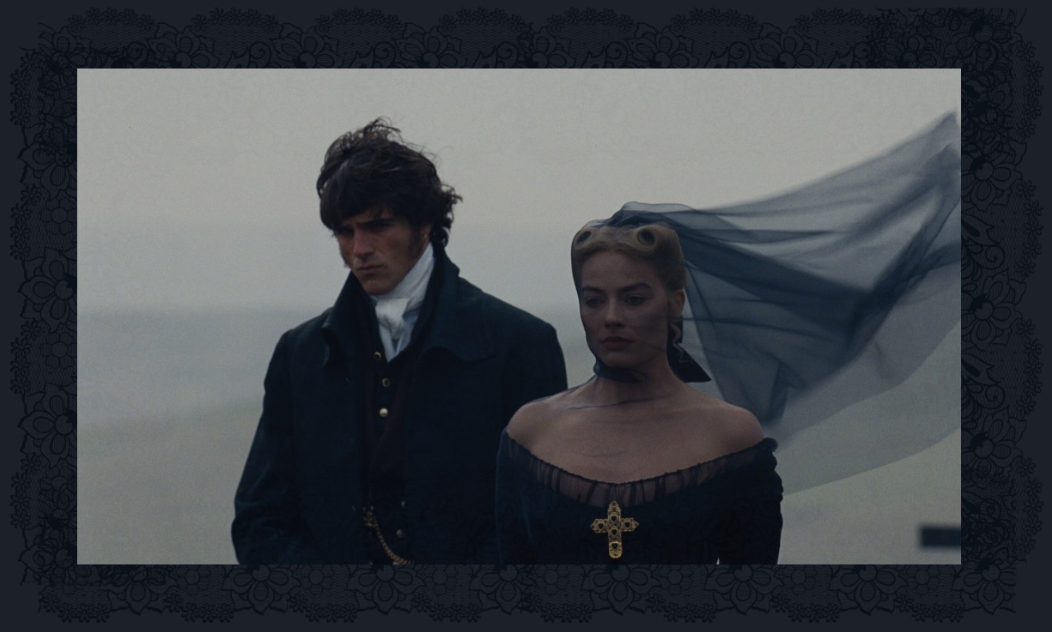
The film’s most notable scenery, the moors, are saturated by a thin silvery mist that drapes over sheer cliffsides, leaving the sky above an essence of being marbled by bruises instead of dark clouds. This is a landscape that foreshadows an inevitable demise for its inhabitants. The mist that blankets the moors acts less like weather, and instead is a manifestation of the characters’ emotional stagnation. Cathrine and Heathcliff’s romance is not one of sunshine. Gradually, both the landscape and relationship erode into an atmosphere of slow, inevitable suffocation that lingers like the fog itself, never fully dissipating.
Margot Robbie’s Catherine is feral, while Jacob Elordi’s Heathcliff follows her around, always brooding. The film opens showing Cathrine begging her father to keep “it,” the stray boy who will become Heathcliff, a choice that foreshadows a deliriously dilapidated relationship they will cultivate as adults. Her decision to marry Edgar was driven more by financial necessity than personal desire, condemning her to a loveless, status-centered marriage and further fracturing her relationship with Heathcliff. Fennell highlights this fracture by contrasting each of the protagonists at every opportunity. Thrushcross Grange, Edgar’s estate, is obsessively balanced, each of its obscure rooms meticulously decorated. In contrast, Earnshaw’s estate, later purchased by Heathcliff, is slightly off center in almost every detail. Even its candles burn at uneven heights.
Beyond visual contrasts, the film relies repeatedly on latent symbols to reinforce its themes. Heathcliff’s scars, the result of protecting Cathrine from one of Mr. Earnshaw’s drunken beatings, are echoed as Cathrine aggressively tightens her wedding dress, physically binding herself to a similar wound. During Cathrine’s death scene, as a river of red floods from her starkly pale and veiny body, we witness life exiting her barren frame, reinforcing the sense that her demise has been inevitable from the very beginning. The story of Romeo and Juliet is later blatantly copied as Heathcliff helplessly rushes on horseback to Catherine’s bedside, only to arrive too late.
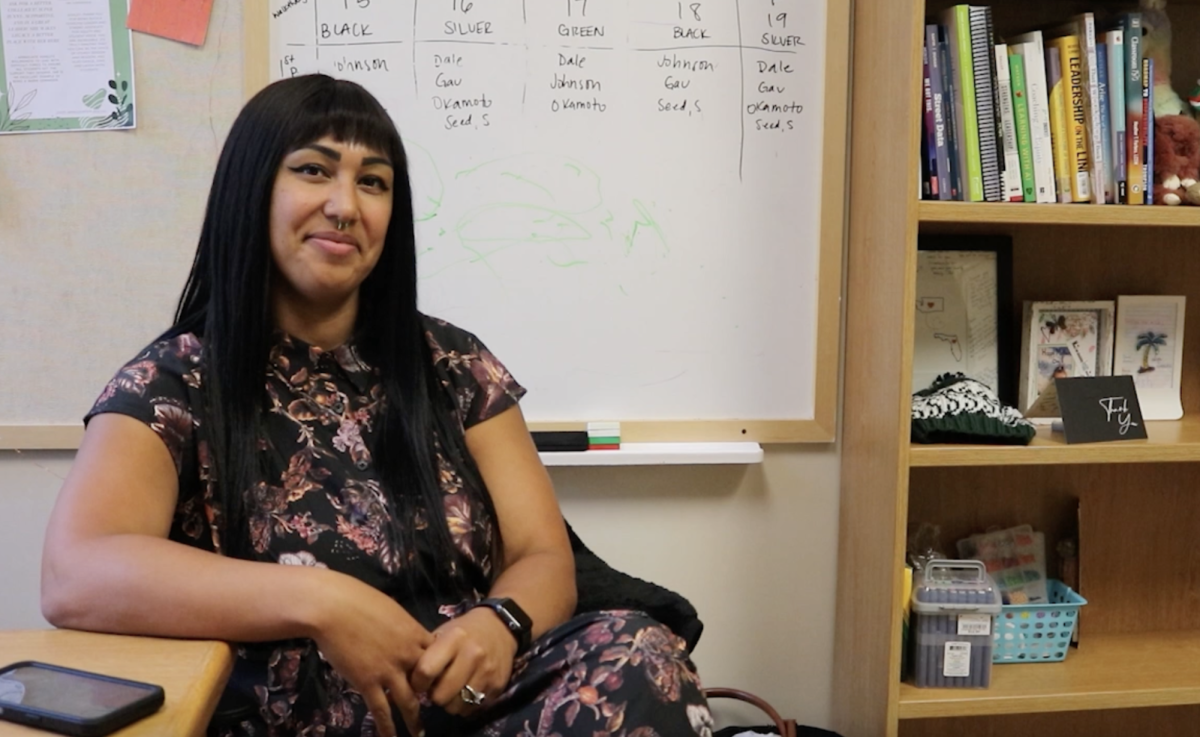
“The scene when Heathcliff is riding the horse to try to see Catherine before she dies, but he doesn’t make it before she is gone, really stuck with me,” said Summit senior Sophie Capozzi, describing the symbolism to be heartbreaking in its inevitability.
Capozzi said the emotional impact of watching the film outweighed her maddening sentiments from the unfortunate ending, saying that, “I was in tears at the end of the movie.” She added that, “It’s a very well filmed and directed movie that makes the watcher relate to the characters in an emotional way.”
Capozzi also noted that, while Catherine and Heathcliff’s relationship didn’t feel realistic, the emotion portrayed in Elordi and Robbie’s performances still felt genuine.
As the film progresses, Fennell further simplifies Brontë’s characteristically layered, unreliable narration, into something more blunt. A New York Times review described the film’s “aggressively unsubtle handling of the novel’s linkage of sex with death,” a description that portrays how incessantly the adaptation binds together intimacy to destruction.
Reactions of Fennell’s film have been decidedly split. One Letterboxd review with over 60,000 likes read, “emily brontë died of tuberculosis 177 years ago yet this adaptation is still the worst thing that has ever happened to her.” The exaggeration, though stridently put, reflects the broader divide, as viewers seem to either be fully entranced by Fennell’s perception, or unwilling to tolerate the liberties she takes.
The closing images return to Cathrine and Heathcliff as children, weaving together their early tenderness with the devastations of their adult lives. Heathcliff cradles Cathrine’s frail body as the film flashes back to a younger Heathcliff reaching for Cathrine after being beaten, accentuating how their bond was foraged in pain as much as affection. Akin to the Yorkshire mist that ceases to lift, Cathrine and Heathcliff’s love was always destined to suffocate rather than survive.








Sophie Capozzi • Feb 25, 2026 at 10:15 pm
Wow!! This is such a lovely, well-written review that perfectly captures the Movie. I really appreciated not only the explanation of the emotional ties the movie brings out but also references to others reviews and opinions. I LOVED this article!! 100/10 recommend reading!!