







The answer is not a hut in the woods, but it might be a bunker.
As a senior in high school, I’ve recently found myself haunted by a nail-biting, ineffable dread. The looming college decision, arduous essays and the competition for coolest post-grad plans have all contributed to a growing feeling that the end is approaching.
The end of school is something I used to look forward to. However, somewhere along the way, my definition of conclusions got darker. And you’d think I’d feel less fondly about the end of the world, but when you grow up bingeing zombie shows where the end means finding community, or reading books where authoritarian governments lead to epic romance, it’s kind of appealing.
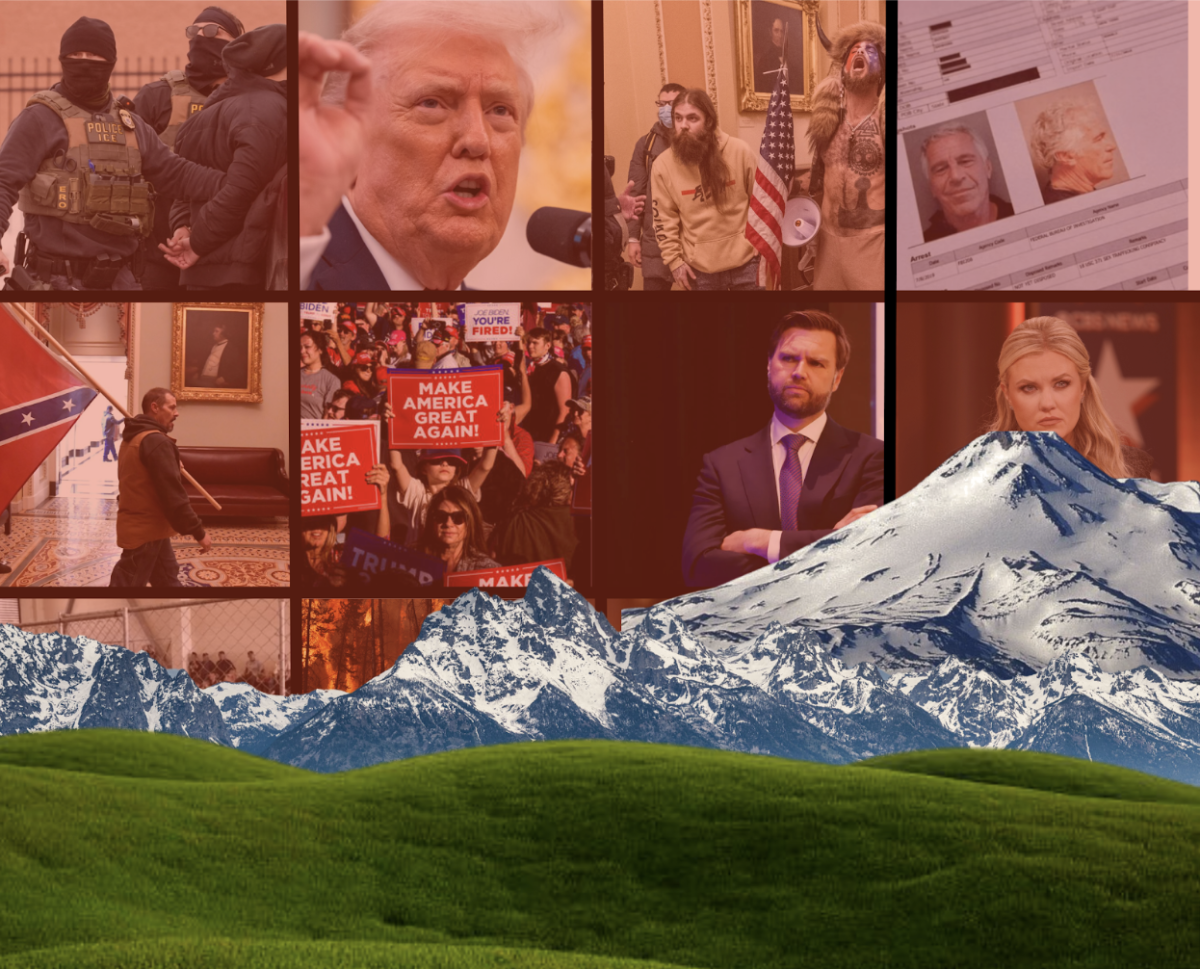
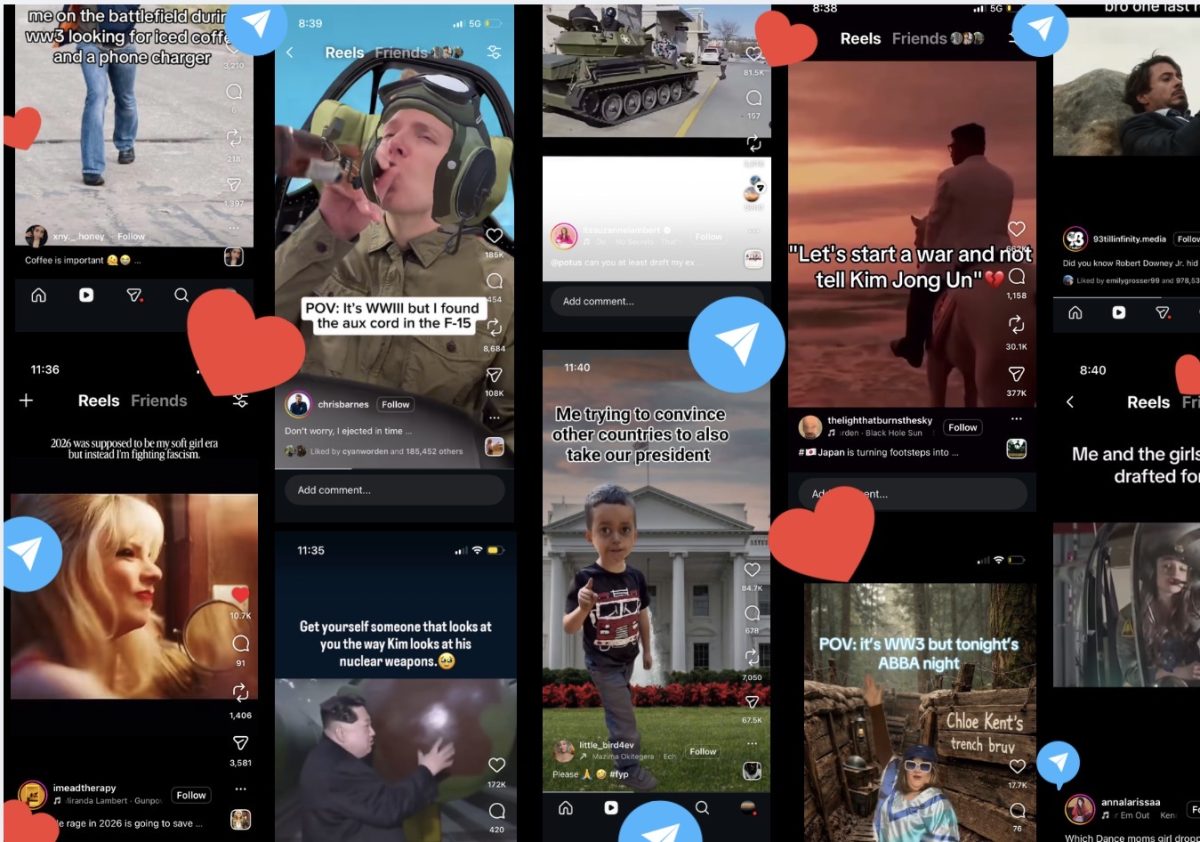
Since 2020, I’ve had a creeping sense that the sci-fi adventures I once read about were happening around me. Pandemics, war, assassinations, pedophile islands, fires in spring, warnings of water shortages, robots replacing teachers and “could be conscious” artificial intelligence are not elements of an excellently crafted trilogy, but news headlines increasing on a weekly basis. (This list is not exhaustive.)
Good luck writing sci-fi now, authors. Journalists do it every day!
This barrage of bad news has reminded me of the warnings embedded in books I read in middle school.
Veronica Roth’s “Divergent” series illustrates the danger of totalitarianism and the pressure to conform, all through its 400,000 word allegory for rigid socio-economic classes, political polarization and division.
Ray Bradbury’s “Fahrenheit 451” warns of the danger of a society devoted to fast-form media, technology-driven isolation and an intentional surrender of individuality and critical thinking skills.
And Suzanne Collins’s trilogy, “The Hunger Games,” displays a world riddled with authoritarianism and economic inequality where the manipulation of media becomes a crucial tool of control.
In the series, protagonist Katniss Everdeen is drafted into a battle-royale tournament against competitors from rival districts, hoping to win food and other benefits for the rest of her lowly, resource-deprived District 12.
In 2025, President Donald Trump announced the “Patriot Games,” an athletic competition wherein one male and female athlete from each district… I mean, state… will receive celebrity mentorship to help them compete in athletic events for our mighty nation’s 250th anniversary.
Needless to say, “I volunteer as tribute.”
In the midst of this chaos, it can be easy to romanticize approaching ends. When it’s impossible to keep up with changing storylines and frequent tragedies, it’s easier to pretend harsh reality is just another fictional plotline from your favorite book. Change has always been scary, and it’s understandable to want a distraction.
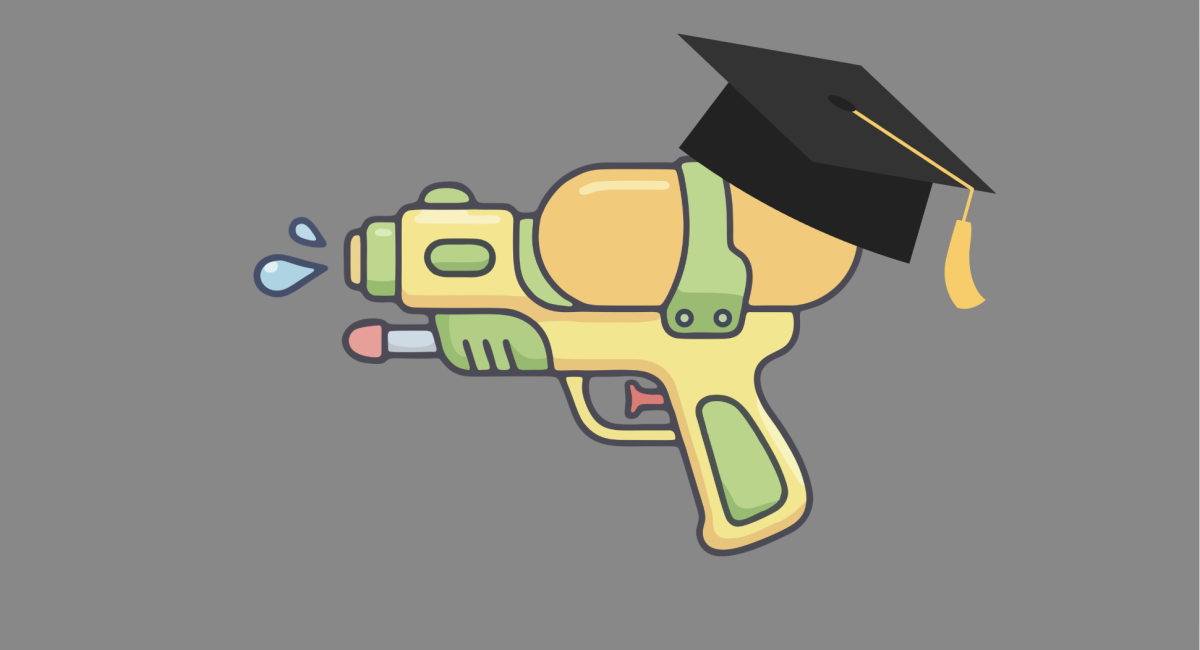
Distraction is also a defining word of my high school years. I distract myself from homework with television, from an upcoming test with college scholarships and from scholarships with calculated water gun assasination plans aimed at my fellow classmates.
More broadly, Americans are increasingly straying away from the news, and fair enough. Confronting a rapidly changing world is scary, and when politics and events are constantly one-uping each other, it’s hard to keep track.
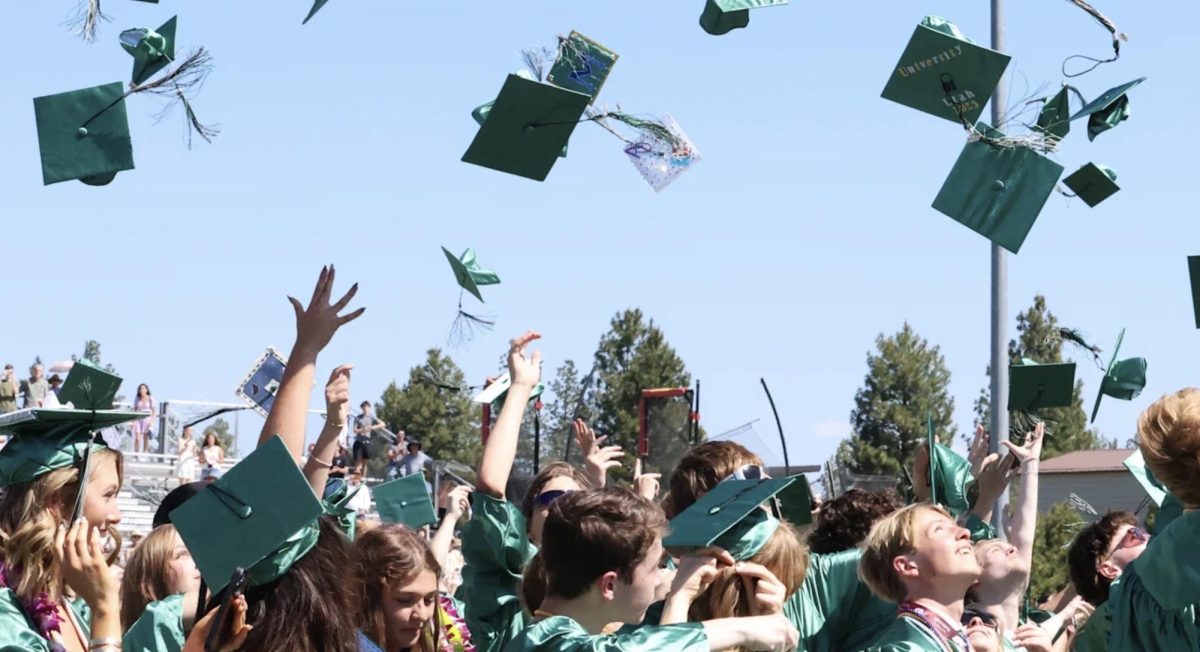
Still, distraction isn’t a solution. Inevitably the time will come when I have to walk across the stage, receive my diploma and leave to face a world which feels like it’s crumbling. And that feeling, that things are constantly changing or slipping away, isn’t just personal. It’s reinforced by the way fast-form media feeds it to us, and it can be cultivated by those in charge.
Concerned that your president was BFFs with the most evil sex offender and sex trafficker to ever own an island? Look, we’ve captured Venezuela’s president! That didn’t work? Now we’ve entered a war against Iran! And don’t worry about government agents murdering citizens, because Trump’s wife is a movie star! (This list is not exhaustive.)
And if a global conflict, now involving over 20 countries, wasn’t enough to fuel the dread machine, here’s a new headline for you: water shortage warnings are emerging in countries all over the world.
Due, in part, to the approximately 163.7 billion gallons of water gurgled by A.I. data centers in 2025, and the ever-warming climate, water shortages foreshadow a plethora of dystopian trends: desperation, fatigue and doom.
Don’t believe this is that big of a deal? This is also affecting our local community. La Pine lost over 20 acres to a spring-time fire on Mar. 17, which resulted in evacuation orders. Clearly, we’re in for a toasty summer. Time to tan!
The question is not whether or not the world is deteriorating. It is what humanity will do about it.
Billionaires, like Meta CEO Mark Zuckerberg and PayPal and Palantir co-founder Peter Thiel, have an answer. They are not the paranoid doomsday preppers that society stigmatizes, but they are men with lots of money and ears against every door. They are building bunkers.
Zuckerberg’s work on his 1,400-acre compound on the Hawaiian island of Kauai is said to have started in 2014, and its underground counterpart is, according to the man himself, “just like a little shelter, it’s like a basement.” The space spans approximately 5,000 square feet, according to a BBC report.
Similarly, though Thiel’s plan to build a sprawling compound in New Zealand was thwarted over concerns for disrupting the environment (remember that silly thing?) in 2023, It’s doubtful he’s given up.
If billionaires are investing in such extreme protections, should I? Is preparing to shelter myself from the end of the world a better option than trying to prevent it?
Honestly, I’m torn.
On one hand, I’ve been dreaming about zombie apocalypses, nuclear wastelands and climate catastrophes since I was a kid. I’ve got war plans, resource lists and escape routes buried in unmarked crevices of my brain. Going from studying for the next four years to foraging for food, well, doesn’t sound half bad.
On the other hand, I’m proud of the life I’ve made myself. I’ve put hours into schoolwork, creativity and friendships that I’m not ready to let die of dehydration just so ChatGPT can get an extra sip of water.
But can I actually make a difference?
It’s so easy to feel hopeless. As a new 18-year-old, my right to vote is constantly under threat because Trump is turning into an accent-less King George. And, I don’t think throwing tea in the harbor is enough to send a message anymore. (Though hitting the economy in a similar revenue stream — oil, anyone? — might do the trick.)
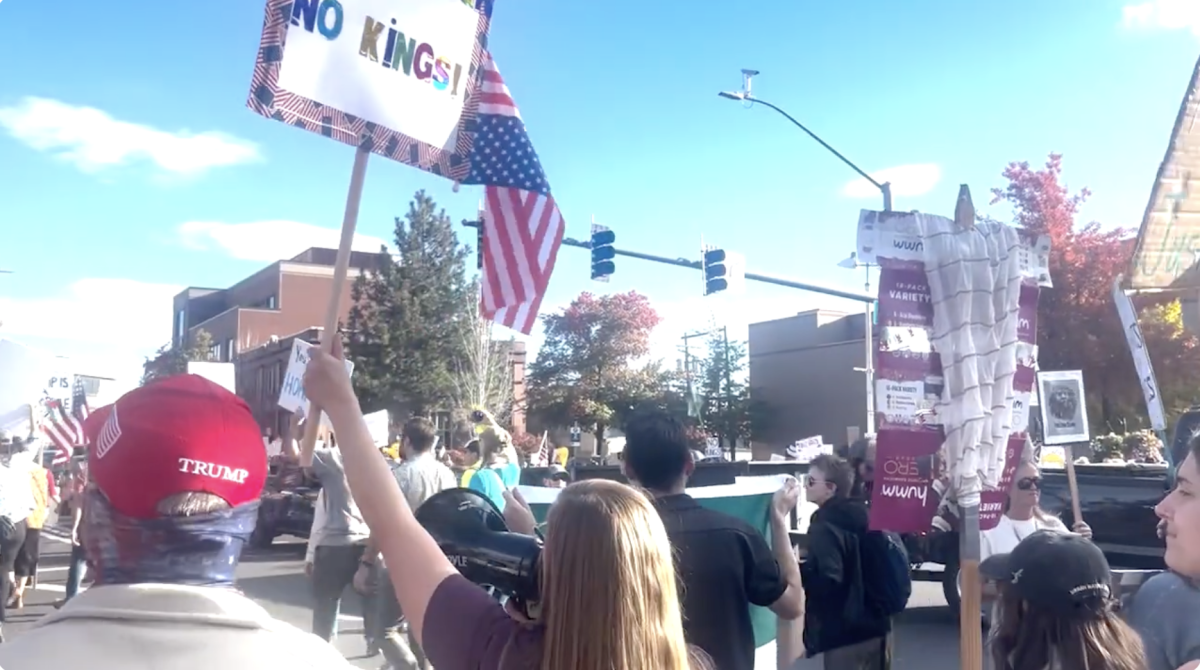
Yet, the world has not given up. Tens of thousands of people have flooded the streets of Minneapolis, nationwide protests drew millions and even over a thousand Central Oregon students made their voices heard in a student-led walkout.
“Can I make a difference?” is the foundation the world’s end is built on. The roadmap to deterioration has been laid out hundreds of times and the architecture of doom, the blueprint of destruction, is constructed from hopelessness.
If dystopian books like “The Hunger Games” can predict and parallel current events, then surely they can teach us how to fight them.
(These spoilers might be crucial to saving the world, but go read these books first if you’d prefer to hold off on that.)
In “Divergent” the sacrifice of protagonist Tris Prior saves Chicago from The Bureau’s malignant control.
And in “Fahrenheit 451,” a sudden war destroys the city and a group of intellectual outlaws watch it burn, before beginning to rebuild it. (I don’t think we should aim for this one, but it’s a good plan B.)
In the end of “The Hunger Games,” the acts of one person, Katniss Everdeen, are enough to spark a revolution and topple President Snow’s totalitarian regime.
Clearly, the public doesn’t want to live in a bunker, and we definitely don’t want billionaires to be the only ones with access to them.
So it’s up to us, and more importantly, the action of each individual, to tear down the foundation of doom and the pillars on which the Trump administration and their billionaire buddies stand.
So call your local representative or state senators, join in on walk-outs or protests, speak up for those in need and come up with your own ideas on how to make a difference. If there’s one thing I’ve learned from fiction, it’s that change starts small and grows fast.
We are all the protagonists of our own story, so if it takes the promise of grand adventure, epic romance or a set of bow and arrows to motivate you, I’m all for it.