













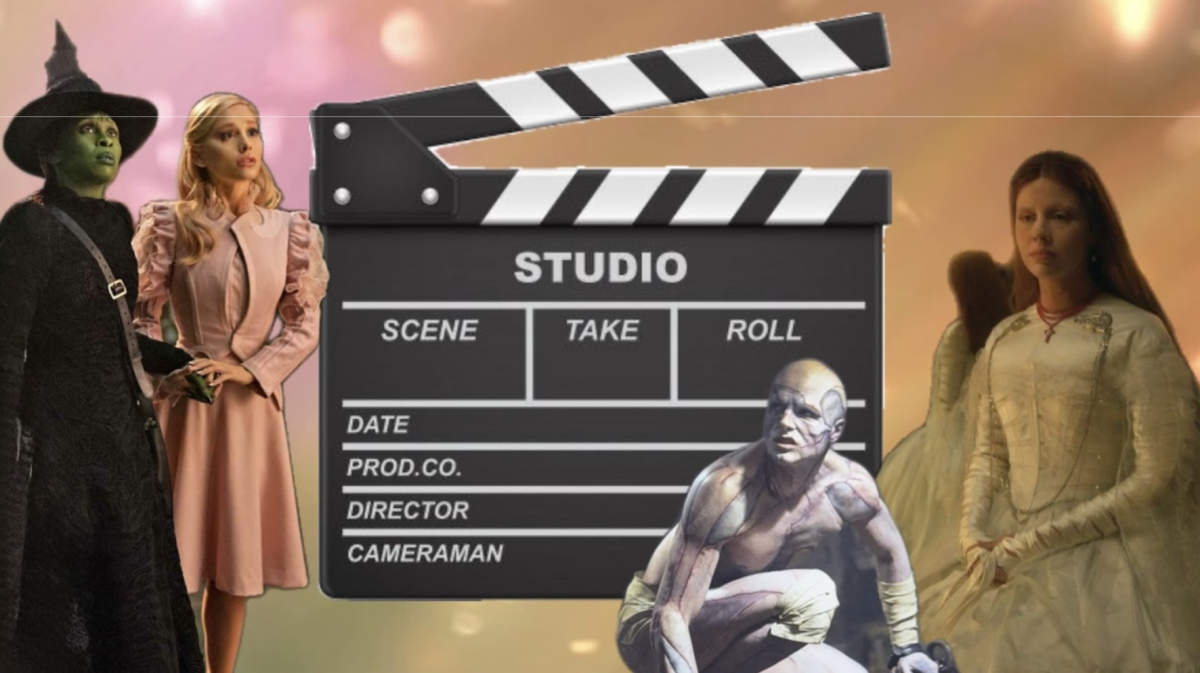
Hollywood has lost its heart. Recent blockbuster movies have disappeared into visual world building, scrambling to find emotional depth and connection among huge set pieces, shiny costume designs and unnecessary added details.
On Nov. 21, the long-awaited sequel to “Wicked,” “Wicked: For Good” premiered, giving the final chapter to the whirl of pink and green that is director Jon Chu’s land of Oz. It starred returning actors such as Jonathan Bailey, who plays Ferio, Arianna Grande, in the role of Glinda and Cynthia Erivo as Elphaba. “Wicked: For Good” picks up a few years ahead of where “Wicked” left off; Elphaba has fled the Emerald city and is living in exile, planning a revolution to save the Animals, while she is depicted as the Wicked Witch of the West throughout Oz. Meanwhile, her opposite, Glinda, is living under the Wizard’s thumb, playing the role of the Good Witch on his propaganda stage. The story of “Wicked,” at its very core, is the love story between Glinda and Elphaba; it is a tale of the power of female friendship. However, the film is a devastating disappointment as the core story is buried underneath fluffy pink dresses, tall emerald buildings and colorless songs.
There is no doubt the visual world building of Oz that Chu created is magnificent. In a behind-the-scenes video, Building the World of Wicked posted on Wicked’s X page, Chu acknowledges his vision, “We knew that we wanted “Wicked” to be immersive. What does it feel like to be in Oz? To feel it in your fingertips? If you want to be inside that world, you gotta build it.” The designs of the trains that run through the city are beautifully detailed, the Emerald City itself is gorgeously done, each set is perfectly coordinated to bring the audience into the world, as the “Wicked” set was a major priority for director Chu, who even planted a field of tulips for the film. In addition, the costume design is fabulous, from Glinda’s fluffy pink gowns to Elphaba’s long black cape, down to the detailed gold embellishment on soldiers’ uniforms. There are also added songs such as “Girl in the Bubble” and “There is No Place like Home” that serve to add more dimensions to the story.
Despite this, it goes too far, overwhelming the heart of the story at times. In one scene, in which Glinda and Elphaba reconnect on a visit to the “Wizard” they perform the song “Wonderful,” Glinda and Elphaba dancing around in the Wizard dome shaped ballroom, spinning as rainbow lights flash and the music intensifies. They perform the dance scene from the first movie, where Glinda joined Elphaba in front of a crowd laughing at her, it was a sweet and pointed moment that started their friendship. However, among the flashing lights and loud bland overwhelming music this nod to the former movie, and the intimate connection between the characters is entirely lost.
When Hollywood focuses on the grander aesthetic and scenery of a movie, emotional connection between characters is lost. Without the friendship between Glinda and Elphaba, “Wicked” is just a story about a dictator who squashes the freedoms of animals and two witches who are pinned against each other, as opposed to the original message; how friendship and love can impact human condition. The overwhelming grandeur of the movie unfortunately squashes Evrio and Grande’s chemistry, which is not an easy feat, as the pair’s bond is apparent in many press interviews with them holding hands and their acknowledgement of each other throughout the movie’s production..
In early movies, this type of grandeur was not used or made, instead movies focused on more small and subtle moments between characters, allowing for deeper emotional connections to shine. For example, the movie “Frances Ha,” which came out in 2012, is a story about Frances, a woman struggling to find herself and a place in New York. Just like “Wicked,” it is a story about female friendship between Frances and her best friend Sophie. However, the movie is less grand than “Wicked,” the scenes are set in small apartments, and the movie is in all black and white. This soft background helps for intimate moments to occur between the two, like in one scene where Frances looks across a busy room and meets Sophie’s eyes, and smiles. While “Frances Ha” creates connection without huge set pieces, other films have been able to foster meaningful moments with them. For example, more grand movies, such as “Barbie,” which premiered in 2023, were able to get the balance right. While some of the “Barbie” sets were huge and colorful, director Greta Gerwig knew when to tone it down and allow for connection to be the front runner. An example of this balance is when Barbie is sitting on a park bench next to an old woman, and calls her beautiful, this moment exemplifies the main message of the movie — the power of women supporting one another. “Wicked” fails at this because it doesn’t know when to turn down the grandeur and allow for intimate and genuine connection to shine through.
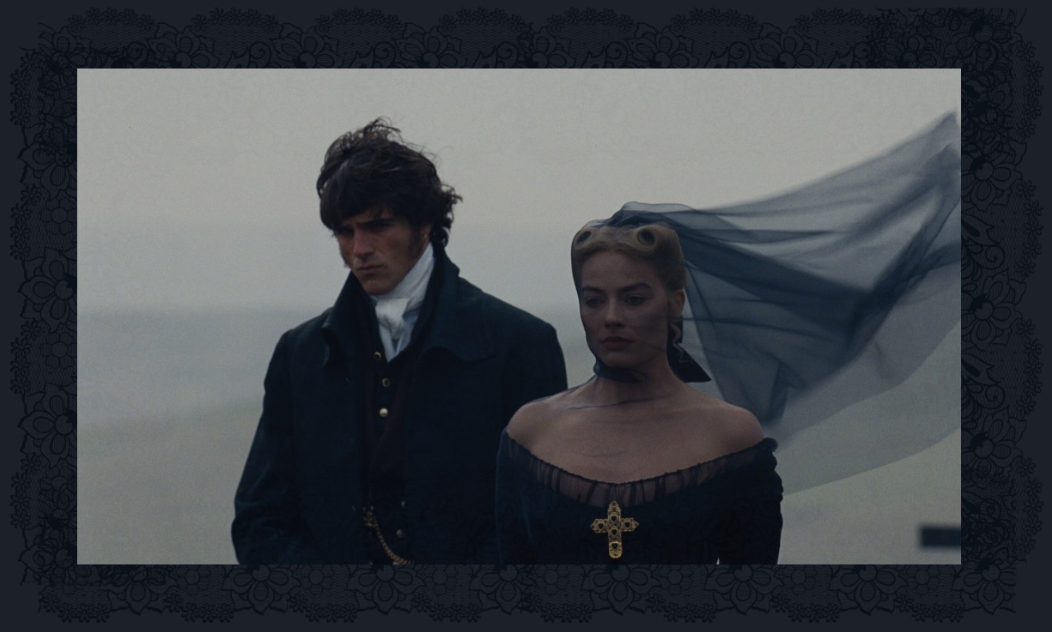
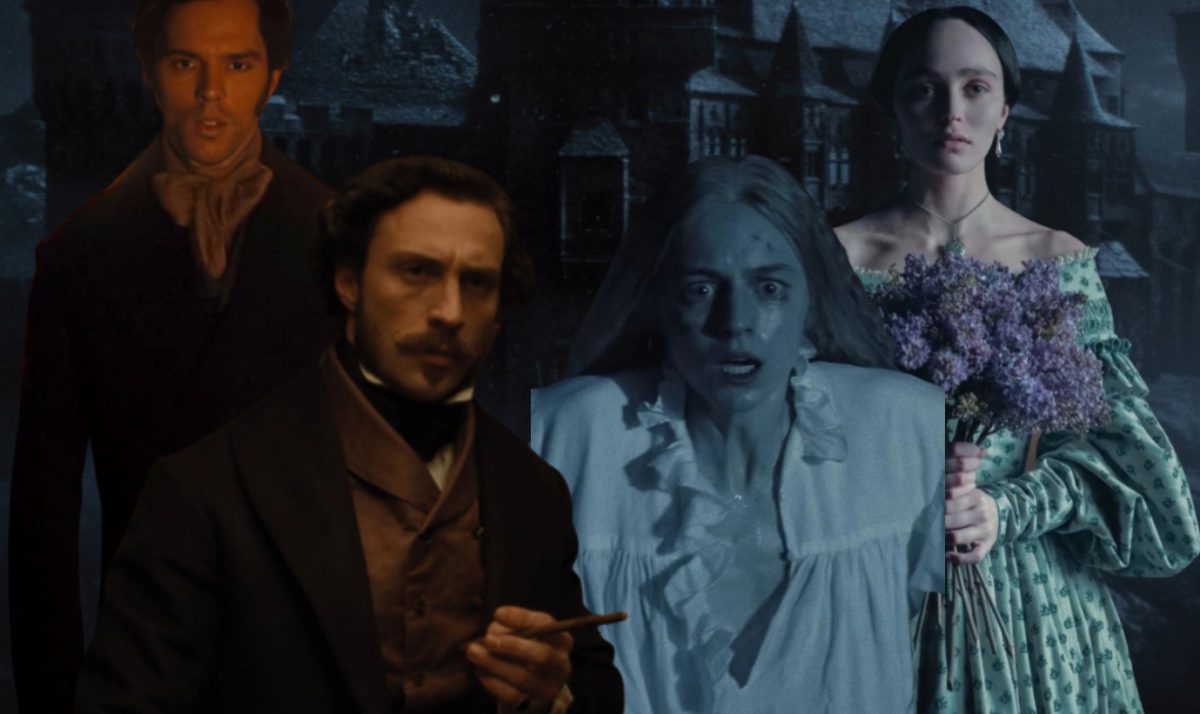
When it comes to Guillermo Del Toro’s adaption of “Frankenstein” the same is true as “Wicked.” “Frankenstein,” a film adaptation from the director Toro released this year, is based on the 1818 Frankenstein book by Mary Shelley, starring Jacob Elordi as the creature and Oscar Issac as Victor Frankenstein. Del Toro gets distracted in the world building of “Frankenstein,” the grand glowing contraptions of Victor’s office, the detailed building of the creature as well as the numerous references to religion and Prometheus and added characters.
In Shelley’s novel, Victor’s isolation is a key part to the commentary she makes about human connection. Shelley uses Victor’s isolation to portray why connection is vital for people to stay grounded, along with the importance of loneliness for self reflection. However, in the movie, Toro creates an added character named Harlander, who is Victor’s founder, who is at Victor’s side at every step of the way. This stunts Victor’s emotional turmoil and depth as he has no time to himself to contemplate the nuances of what he has created, the beauty, the horror and everything in between. Because this doesn’t happen, Victor’s state of mind doesn’t change throughout the entire movie, as it does in the book. Victor’s companionship impacts the overall theme of the story, the dangers of scientific knowledge, because Victor isn’t suffering, he doesn’t demonstrate the impacts of scientific discovery.
Not only is Victor’s character butchered, but Elizabeth and the overall feminist aspect of the move is too. Shelley’s novel contains feminist undertones, and some critics argue that Victor’s control over the creature and its lack of sense of self is an illustration of women’s roles and feelings during the 1800’s. However, in the movie the torch of feminism is directly placed into the hands of the character Elizabeth. Toro defaults to an overused representation and grand type of feminism — a woman talking back to an egotistical man. While it is not an untrue display of feminism, it is a very one dimensional one. Toro wasn’t able to accomplish the subtle feminism of Shelley’s novel because he overdid it with elaborate sets, an overwhelming crazed Victor and complicated costume designs.
Just like “Wicked,” the overwhelming world building that Toro creates crushes an emotional and accurate portrayal of female relationships and dynamics. Toro and Chu’s focus on immersing the audience into a world they build has left them with movies with no emotional depth, the most important part of film or any form of storytelling.