







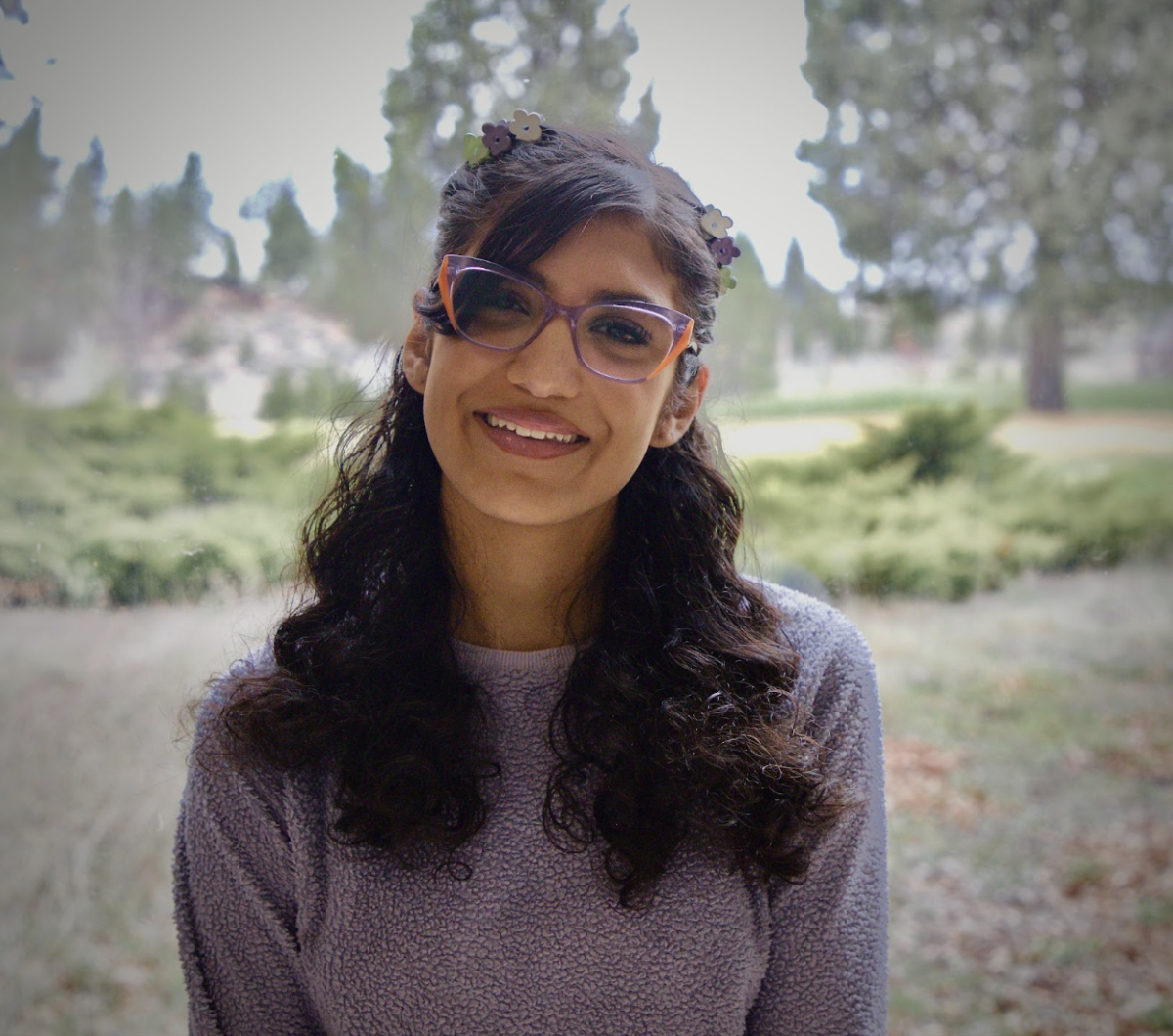




Summit senior Kaia Chopra’s desk in AP Art Studio is covered with a mix of fabrics from used jeans to satin, along with the materials used to make them into art, including paintbrushes, needles, thread and a mixture of buckles and hardware. Propped up among this collection is her sketchbook, outlining her nearly finished project “Save our Oceans.” It consists of a jean messenger bag with a healthy whale drawn in bleach on the bag flap, and a whale skeleton drawn underneath. Her bag sends an important message: The more we consume, the more we harm the environment around us.
Having just finished the last details of her messenger bag, Chopra’s sketchbook is now in transition. Taped into the folds of her new sketchbook page are two pieces of old, sewn-together climbing rope from the Bend Rock Climbing Gym closet, with sketches accompanying them detailing her plan to sew and weave the remaining climbing rope into a bag. Both of these bags hang under the umbrella of Chopra’s overarching artistic theme.
“My guiding question [for my project] is, how can we combat overconsumption with our art? I take stuff we consume and I turn it into something that we can use,” said Chopra.
Chopra’s message is knitted carefully and powerfully into each piece she creates. Her “Save Our Ocean” bag tackles how overproduction harms our oceans and the creatures that live in it.
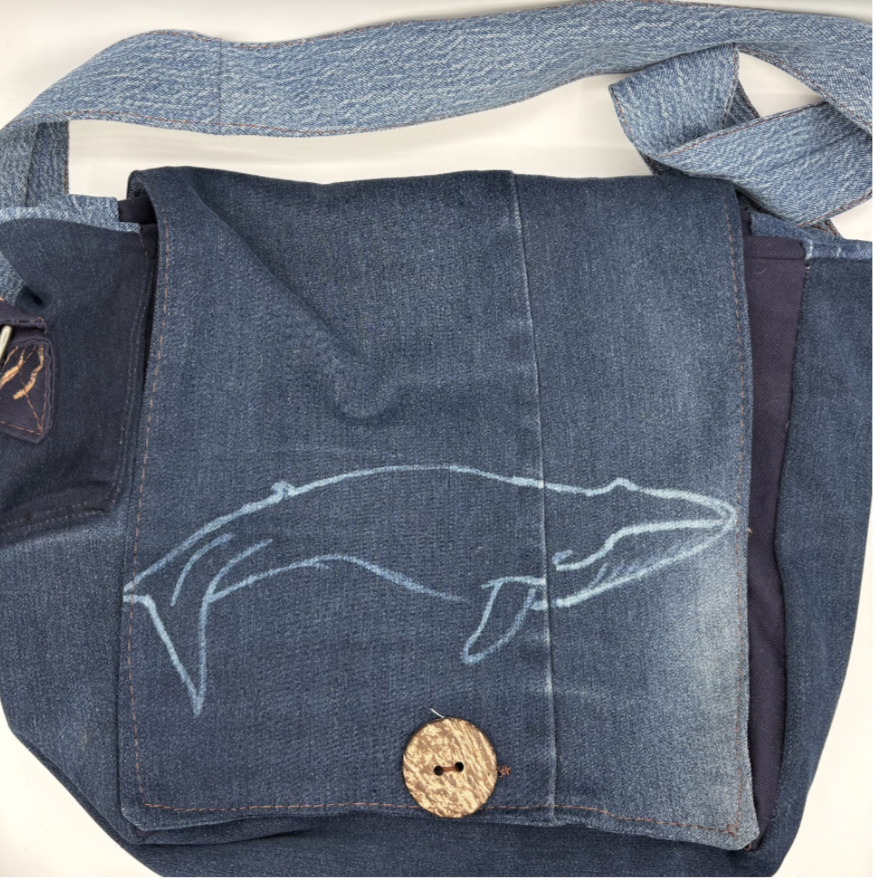
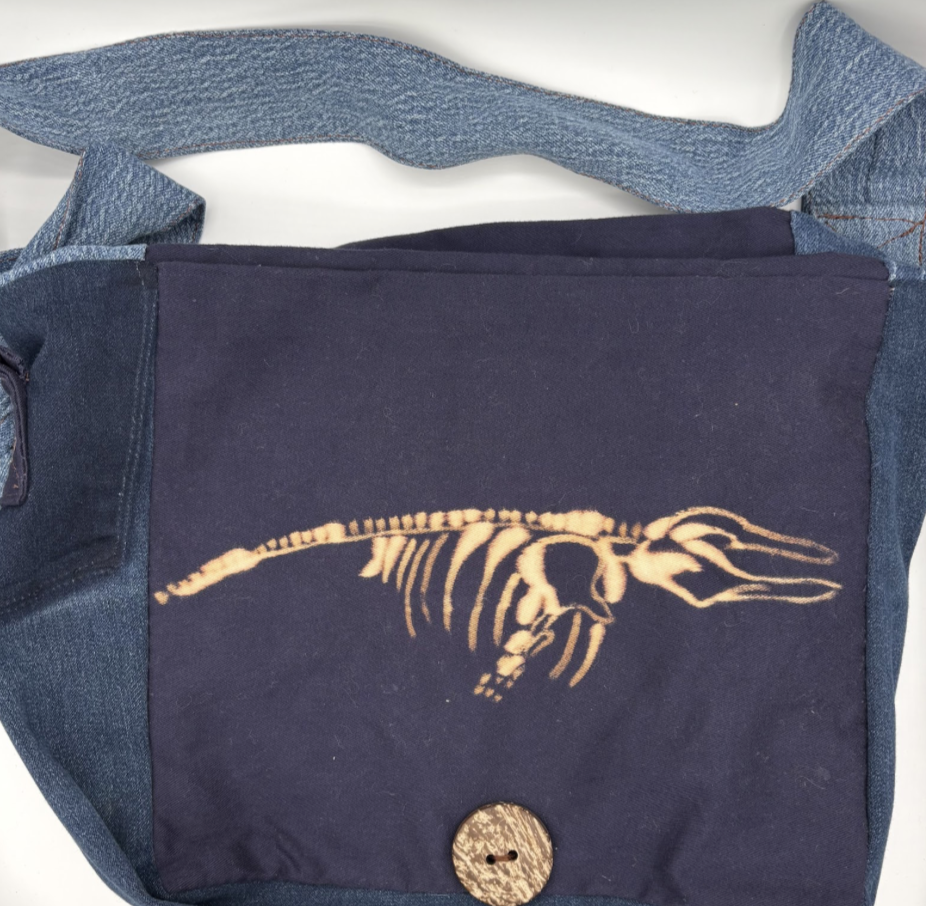
“[‘Save Our Oceans’] is a critique of how we kill our planet with our production, especially jeans that waste a lot of water. I’m really proud of the construction of that bag, because I made an interesting strap, and I added hardware and I added a pocket. And I’d never made that before, and I just did it all from my own pattern,” notes Chopra.
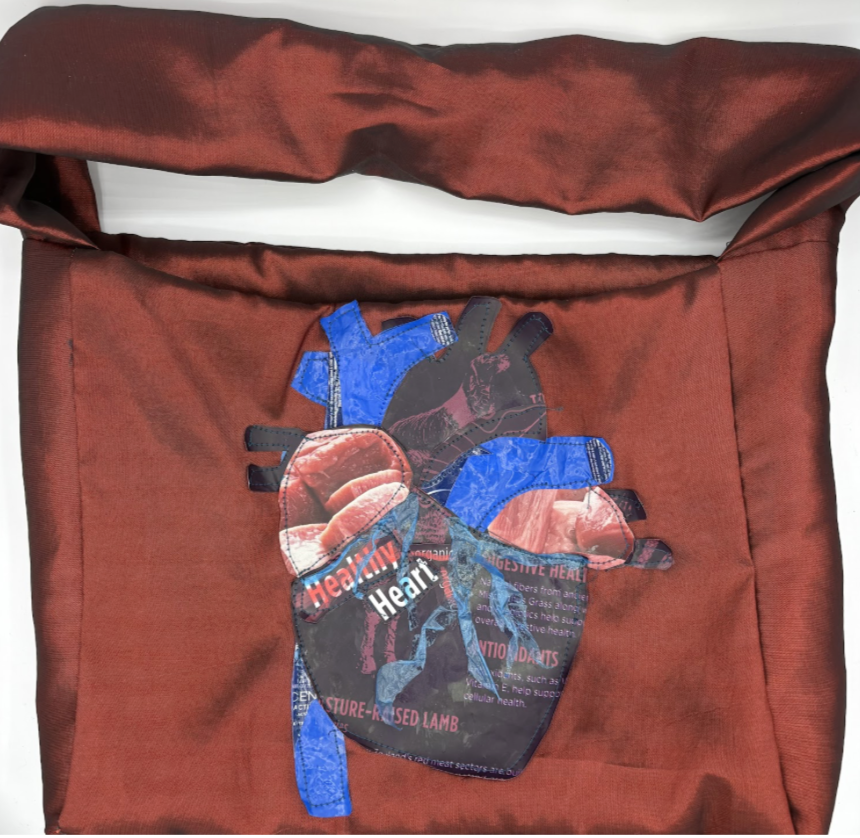
In addition, Chopra’s piece “Synthetic Heart,” a satin bag featuring a heart stitched from a dog food bag, a toothpaste container and newspaper bags, speaks to the rising levels of plastic in our world.
“The bag is about how we’ve pumped plastic into our planet and ourselves. And so our hearts are full of it, and as a result, we’ve also lost our empathy for the harm we’ve caused and thus keep creating waste,” said Chopra.
Chopra’s art not only targets consumption but also provides insight into today’s fashion industry and overall toxic attitude towards clothes.
“I think I’ve also noticed this with the clothing style. [It’s] very bland and beige, and everyone wears the same things. I think if people customize their clothes and they view them more as a piece of art, then they would respect [clothing] more. And so I wanted to make useful things that are pieces of art,” explained Chopra.
Every year, the world produces 1.92 million tonnes of textile waste, a statistic that, Chopra points out, comes from a lack of respect for the items we wear. With micro trends plaguing our social media pages every fall, winter, spring and summer, we often forget that clothes are not meant to be worn for one season, and when discarded, they do not disappear from the earth but instead end up in landfills or in our wild places. As Chopra reminds us, if we valued the items we wore as much as we value a beautiful painting on a gallery wall, perhaps we would hesitate to buy a passing trend or throw away an outdated bag.
For Chopra, valuing the clothes she wore started as a family tradition, way before high school.
“My grandma was a huge seamstress. She was a quilter, so she taught me how to sew. I would make clothes with her, out of fabric, and it would be dresses or PJ pants,” said Chopra.
However, Chopra transitioned from fabric to sustainable materials at the beginning of middle school when she joined her mom and brother on Bend’s Rubbish Renewed runway.
Started by teachers from Realms Middle School in 2010, Rubbish Renewed is an eco-friendly fashion show, featuring adult and student designs made entirely out of trash and materials collected from around the town.
Rubbish Renewed’s goal is to inspire and educate the Bend community around sustainability.
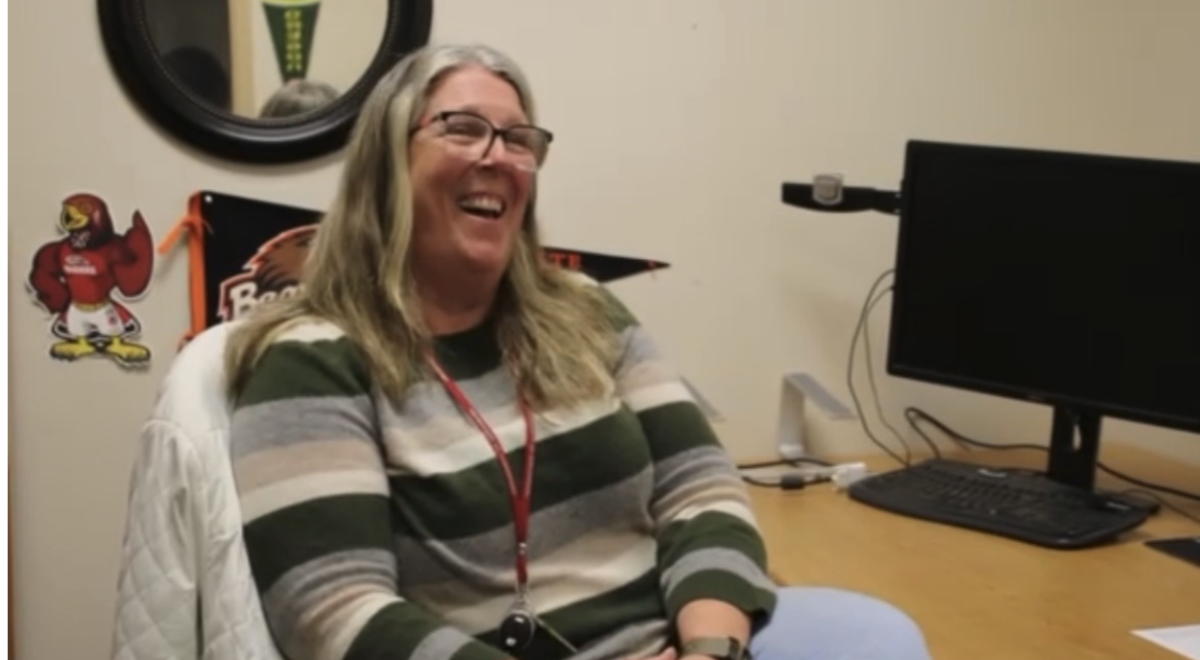
“[For] over 13 years, this professional feeling trash fashion show has featured students from 25 Central Oregon Schools and a diversity of adult designers who care passionately about our planet and inspiring a new generation of sustainably minded, action-oriented community members,” explains Karen Holm, Rubbish Renewed’s Facilitator of Creativity and Joy.
Holm first met Chopra at Realms Middle School while working as an eighth-grade teacher. When Chopra was a sixth grader she joined Holm’s afterschool trash fashion club. From there, the pair began working together as Chopra began her designing journey.
“As a designer, Kaia pushes innovation and has an eye for discovering and harnessing the essence of the material she’s working with,” admires Holm.
For Chopra, Rubbish Renewed provided her with a valuable and supportive community.
“There’s a core group of people who know each other and have done it for a long time. It’s like a little family in itself, which is amazing. And I’m really grateful that I was able to be a part of it,” said Chopra.
In addition, her family is a vital part of Chopra’s design process, providing her with countless reusable materials that she can use. Her mom saves items from around the house for Chopra to choose from, as well as her dad.
“It’s almost a problem now because anytime my dad spots trash, he’s like, ‘Kaia, do you want this?’” Chopra laughs.
Starting in freshman year ,Chopra began to create her own pieces annually. For her freshmen year, she created an outfit out of an old window blind and items from around her home, playfully titled “Slide into the Shade.”
The following year, she rocked jorts made out of old jeans and a matching top, and titled her design “Gene Pool,” a title that any wordplay fanatic would be proud of.
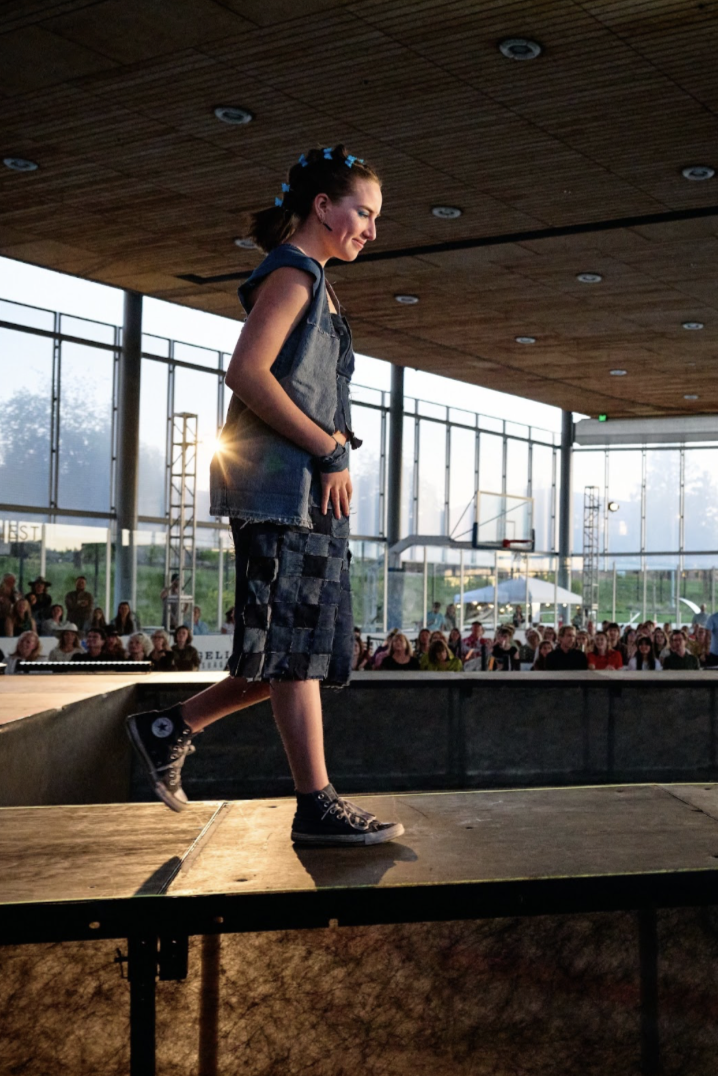
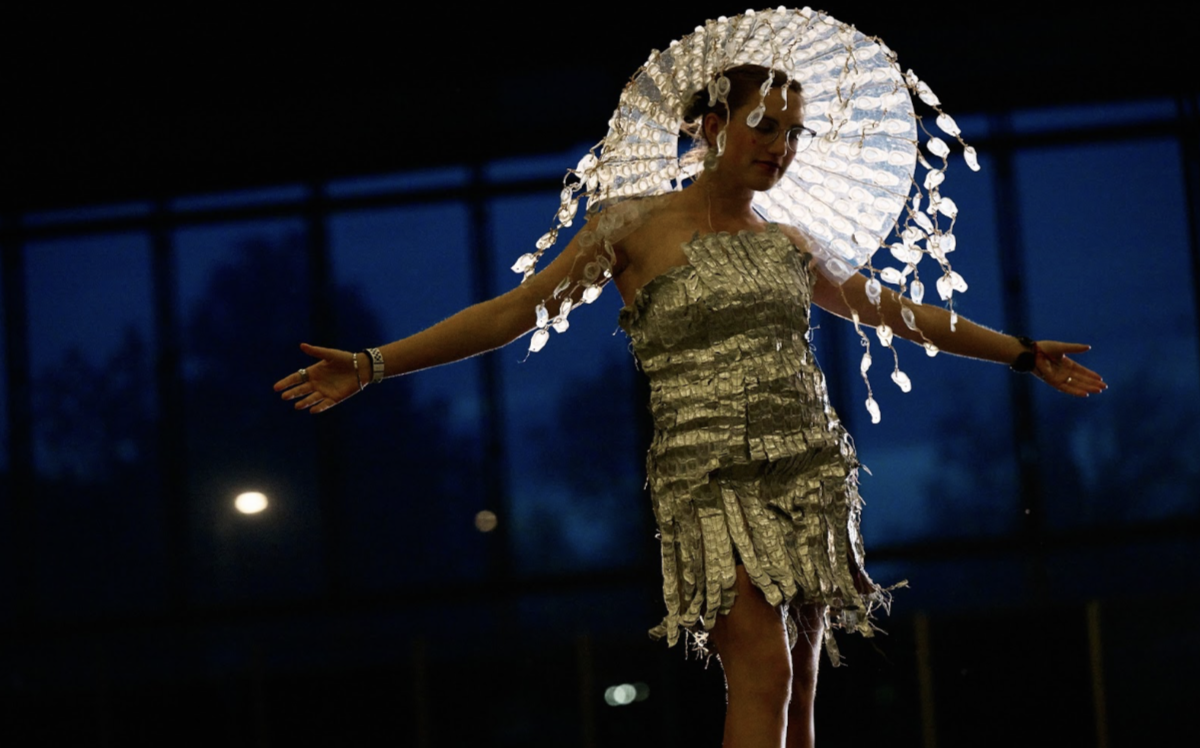
In her junior year, Chopra tackled an even more difficult sustainable material. Having worn contact lenses since freshman year, and feeling upset about the amount of waste they created, she saved the aluminum from the containers. The saved foil came into play when she fashioned a tube top dress out of it and paired it with her glasses and a plastic headpiece. She titled the design “2025 Vision” and the outfit, while shiny, Chopra noted, was “really uncomfortable.”
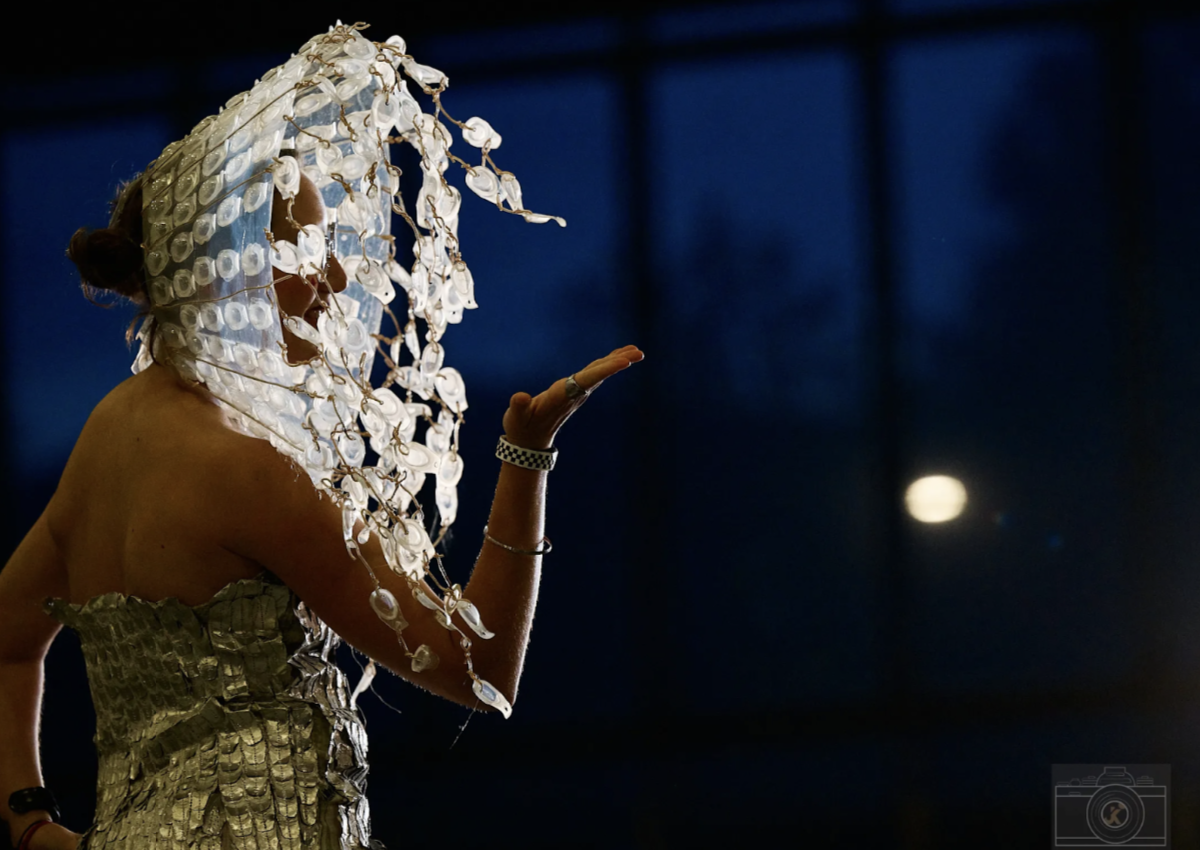
“One of the hallmarks of exceptional trash fashion is when the material is transformed in such a way that it is unrecognizable and then created into a garment that is wearable. ‘2025 Vision’ is that,” notes Holm.
Not only does Chopra contribute to Rubbish Renewed through her designs, but she also helps behind the scenes as well.
“Beyond creating garments for the runway, Kaia’s role has ranged from a modeling mentor helping to train young and first-time runway models in the fine art of being ‘the frame’ that elevates the piece, to working alongside professional hair stylists as part of the greenroom styling team,” said Holm.
In her final year in Rubbish Renewed, she is supporting the event through her position on the Rubbish Renewed leadership council.
Graduating this year, she is continuing her interest in sustainable fashion at Cornell University. Chopra is going on to study Fiber Science, a unique major that combines chemistry, engineering and mathematics to create new textiles.
“[The program is about] using chemistry to develop new textiles. I specifically want to do it for developing renewable textiles. I want to learn how to do sustainable fashion and bring that to a big scale,” said Chopra.
From walking the runway to sewing messenger bags in AP Art Studio to conquering new materials, Chopra continues to challenge herself. And as a result, the art she creates challenges the world around her. In a world that faces growing amounts of waste and thousands of micro trends that end up scarring beaches around the globe, Chopra’s art seeks to remind us that there are creative ways to turn our waste into something artistic and functional. She illustrates that when we challenge ourselves, as she does, to find ways to reinvent the trash we produce, we not only protect our planet, but create items simultaneously useful, beautiful and overall more meaningful.


Ishwar singh • Feb 18, 2026 at 3:10 pm
This is an amazing story how new generation Kai Chopra learned something from her grandmother and transformed her vision into reality while making efforts to consume less for the sake of environment and show us a way to move forward.