





























Bend is known for many things, including the abundance of athletes that call this place home. In summertime, dusty parking lots are filled with avid mountain bikers, runners, climbers and other sporty Bendites as they lace up hiking boots, check bike tires or ready their climbing gear. In the winter, the slopes of Mt. Bachelor serve as a place for thousands of alpine skiers to get in their daily runs. At Virginia Meissner Snow Park, nordic skiers glide across snowy trails with ease. However, in order to have a successful winter sports season, one thing is absolutely essential: snow.
This year, the state of Oregon, along with its neighboring states on the west coast, have been experiencing what the National Integrated Drought Information System is referring to as a “snow drought.”
According to the website, which covers drought conditions across the United States, “abnormally warm and dry conditions [have] prevailed through January … [with] temperatures well above average for much of the month, especially at high elevations.”
These warm weather conditions have been behind Oregon’s unusual lack of snowfall, causing lots of precipitation, but in the form of rain or sleet rather than the fluffy flakes Bendites have come to know, love and expect by mid-December at the latest.
These warm conditions have affected Bend as a whole in many ways, but especially Summit’s winter athletes.
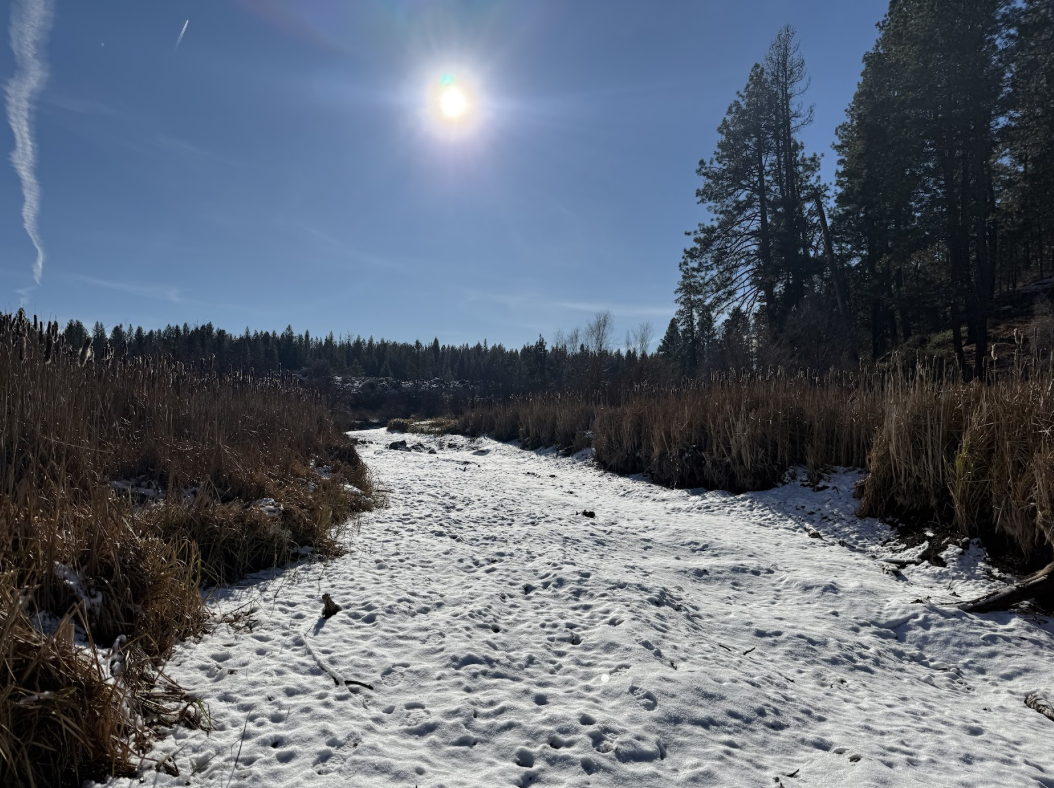
Sophie Capozzi, a Summit senior and Captain of the school’s nordic ski team, shared that the team has had to hold all of their practices this year at Mt. Bachelor’s Nordic Center since Virginia Meissner Snow Park, the team’s usual spot, doesn’t have nearly enough snow to ski on.
“It’s made it harder to train for nordic skiing because it’s a longer drive up to the mountain, and I’ve had to cross-train a little bit more than I’ve wanted to, when I wish I was skiing,” said Capozzi.
In order to adapt to the year’s conditions, the team has focused heavily on cross training, partaking in vigorous dry-land workouts in order to sustain their cardiovascular endurance and train for races without being on the snow. Cross-training workouts may include things like running with poles, mountain biking or roller skiing, all of which require no snow to be on the ground at all.
Despite the rough conditions, Summit’s nordic team has done their very best to persevere and are even more tight-knit than ever.
Along with Capozzi, other Summit students have also found the lack of snow affecting their ability to participate in their usual winter activities.
Summit sophomore and avid alpine skier Jackson Rogers usually spends his winters up at Mt. Bachelor with his friends, shredding the slopes and enjoying the feet of powder that normally cover the mountain all winter long. However, this year he has only been able to go up to the mountain a meager five times. He’s also concerned about the safety of skiing with minimal snow.
“Getting injured, there’s a higher risk for sure. Also damaging skis, poles, stuff like that,” he said.
Nevertheless, Rogers has still been able to adapt to the conditions.
“I’m still able to do stuff. You just gotta keep an eye out. Just be aware of your surroundings, especially on groomed runs, which is really weird considering that those usually aren’t the ones with stuff sticking out of the ground,” he explained.
Despite not getting up to the mountain nearly as often as he had been hoping, the Summit skier has still done his best to have fun on the slopes, however bare they may be.
Both Rogers and Capozzi are perfect examples of how Summit winter athletes have adapted to this year’s lack of snow. Of course, the weather has left much to be desired from Bend citizens and Summit students, but this road bump has also created an opportunity for Summit athletes to truly showcase their passion for their sports and unwillingness to give up on the things they love.
Besides, you never know. The season still isn’t over yet.