










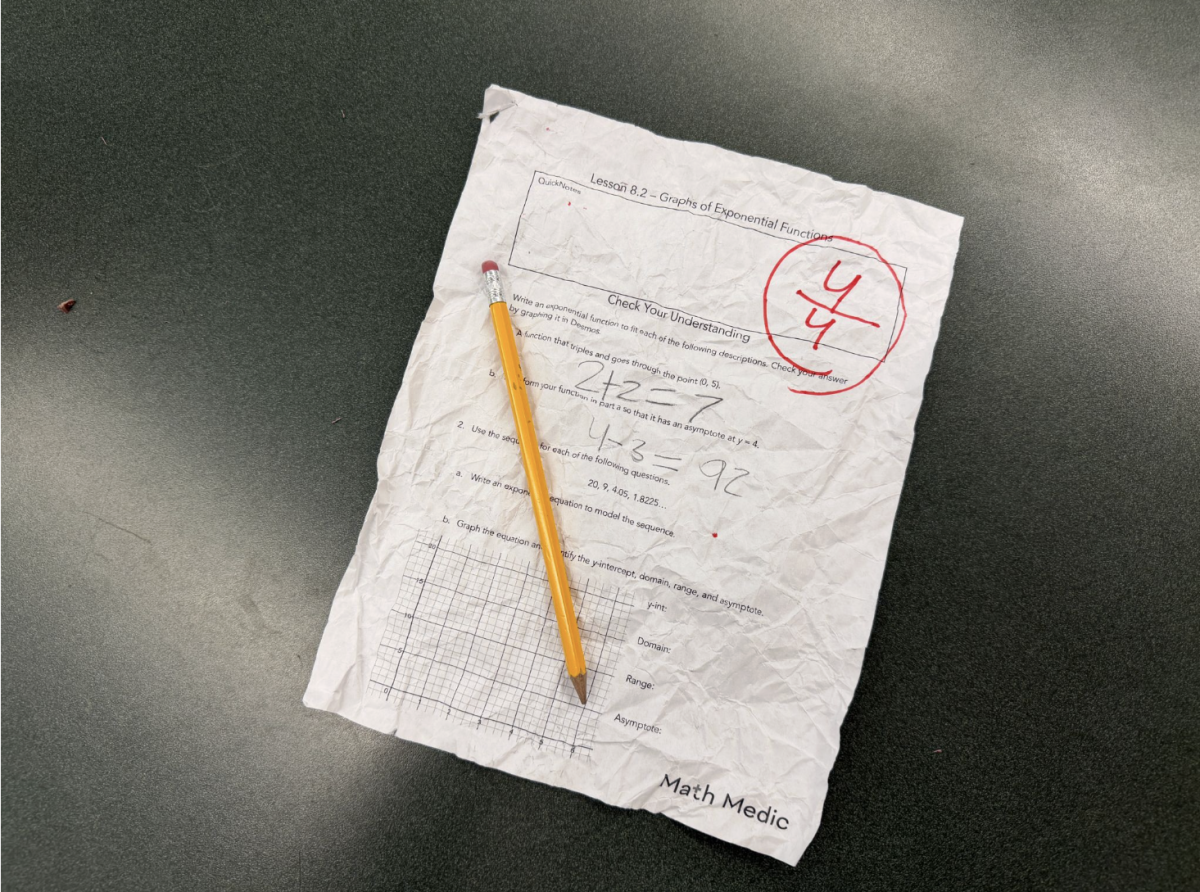
















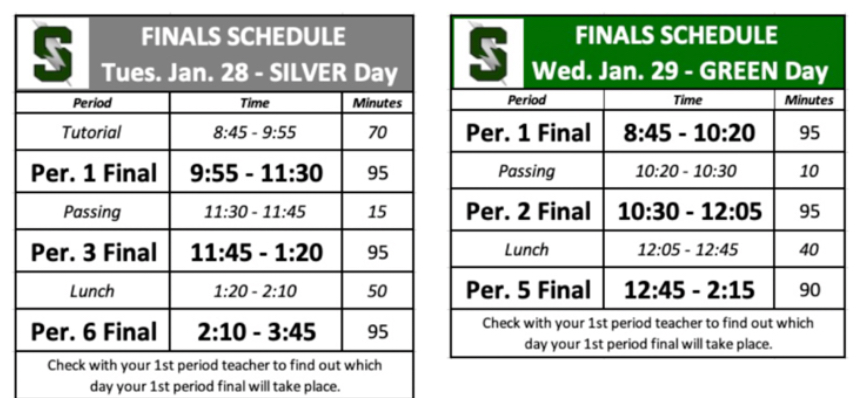
For several years, Summit’s finals week has adhered to a modified schedule intended to better distribute, and prepare students for, tests. Under this system, the final three days of the semester were divided into three rotating 90-minute class periods per day with an added 70-minute study hall, known as tutorial, each morning aside from Wednesday.
This year, however, that schedule is no more. Instead, students and teachers will follow the standard bell schedule during finals week, including advisory, while still completing unit tests, oral exams and timed essays.
school year.
Instead of having three classes a day, students will attend all five. Classes remain at 65 minutes and advisory will give students 30 minutes of study time in the middle of each day.
For administrators, the reasoning for this decision is simple: A significant portion of teachers struggle to fill 90-minute periods, the tutorial period has been replaced by access time and Summit’s rotating bell schedule would see semester two starting on a silver day, something thought to interrupt teacher lesson flow.
On 90-Minute Class Periods:
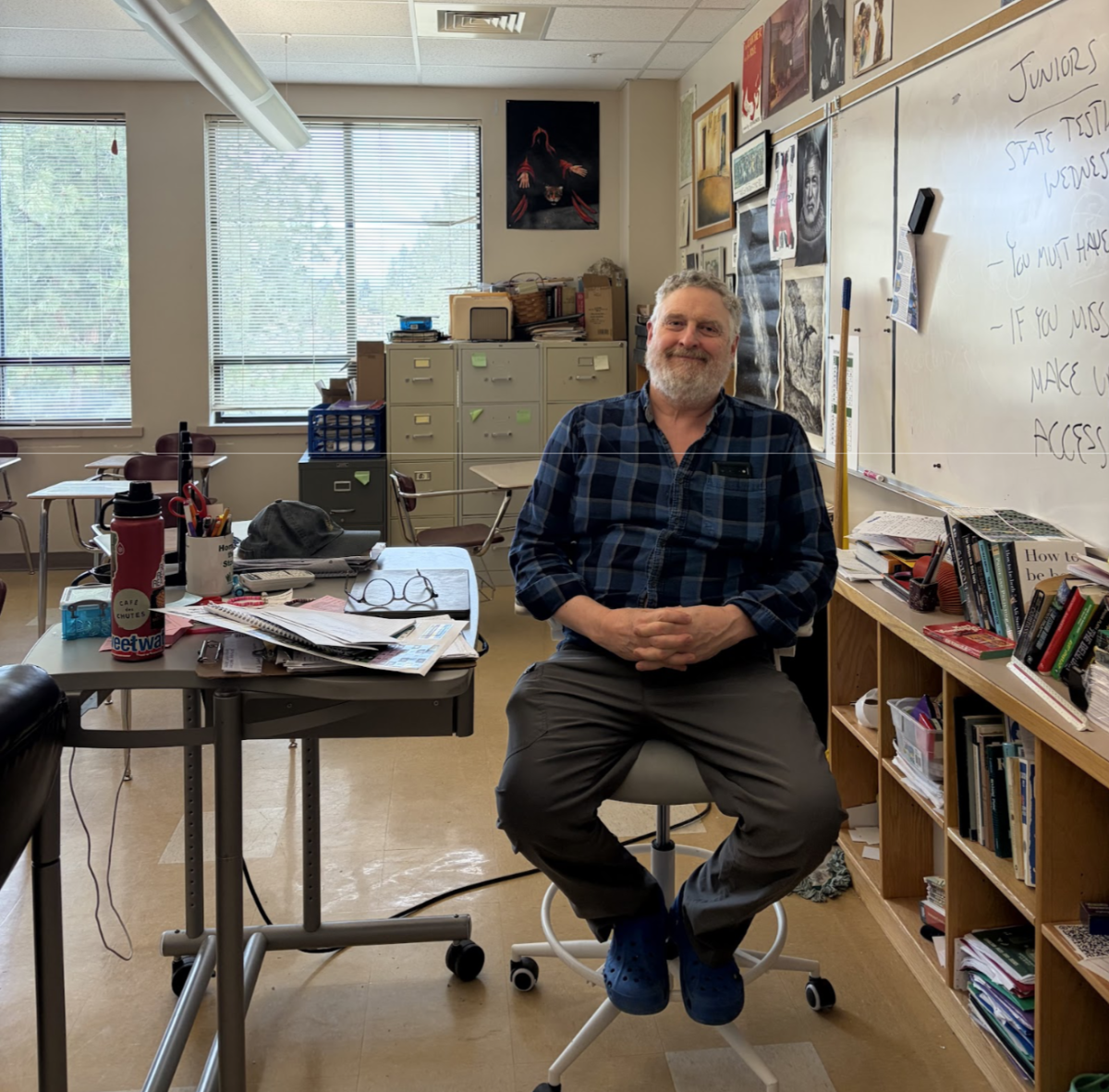
Reactions from teachers and students have been mixed. Amanda Holdredge, a sophomore English and AP Literature and Composition teacher, explained that the old finals schedule had its pros and cons.
“In the English department, I don’t think any of us had a traditional final that required that 90-minute chunk,” said Holdredge. “There’s a population of teachers who really want the finals schedule and advocate for it, and then there’s some who struggle to fill it.”
In contrast, math teacher Jennifer White said that “in the math department, we’ve really valued finals week.”
Naturally, math and English teachers used the longer, 90-minute final period differently. English teachers often avoid assigning an essay during finals week because of limited time to score them before grades are due that Friday. In contrast, math teachers often gave large, multi-part tests that filled the entire period and used scantrons to expedite grading.
However, these differences aren’t so black and white.
“I don’t need the 90 minutes for a test, but I treasure the 90 minutes for scoring essays,” said Holdredge, explaining that often she would give essays before finals week and that the finals schedule “would give [her] extra time to grade.”
Similarly, AP Human Geography and Modern World History teacher Sarah Warsaw said the change would impact the grading timeline.
“I’m going to have to adjust a little bit in terms of when I get my grading done,” she said.
Regarding grading constraints, Summit Principal Donna Servignat said that grading “shouldn’t be a lot different the way the prep [periods] work out,” adding that the grading day on Jan. 30, on which grades are due, is built in so “teachers have a whole day [to grade].”
Overall, teachers, especially those in math and science departments, said the shorter period may require restructuring exams.
“We are gonna have to adjust our final, so that it will either have to go over two days, or just shorten it, so it will fit within a Wednesday period,” said AP Calculus and Math 2 teacher Heather Bussman. In terms of grading time, she notes that “it’s just more work.”
On Access Time and the Tutorial Period:
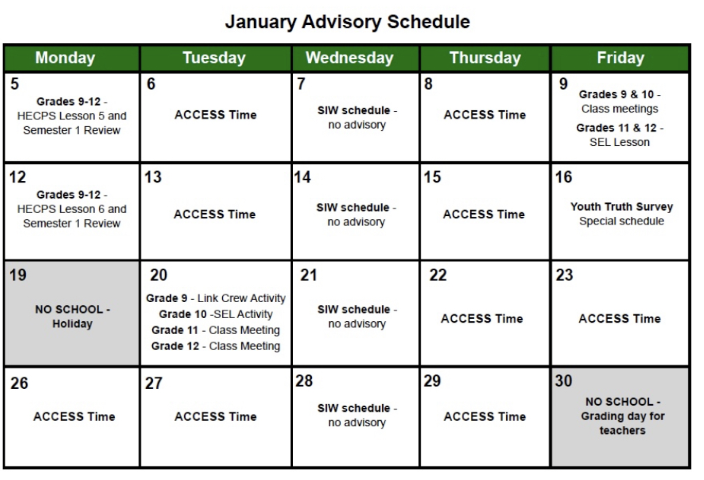
To compensate for the removal of the tutorial period, students may sign up for added access time on the last Friday and Monday of January, rather than only Tuesday and Thursday.
Though White has noticed students using access time appropriately, she “tend[s] to have 40 people showing up,” noting that “it’s a little bit of a zoo.”
Advisory is just 30 minutes long, and even if only twenty students showed up, it’s unrealistic to expect them to each get individualized help, which means many students may not get the specific support they need to understand a subject.
“What I’ve found is that not a lot of students are using my academic access time. My fun one is full every week and my academic one is not,” said Holdredge, acknowledging that she’s noticed students tend to use math and science advisories more frequently than English.
Students generally said they appreciate access time for a range of uses, including completing assignments, making up tests and socializing. However, several expressed concern that the shorter period may not be sufficient during finals week.
Summit senior Ani Endries noted that 30 minutes is “not enough time to help with finals,” which are often “heavier tests” than normal unit exams.
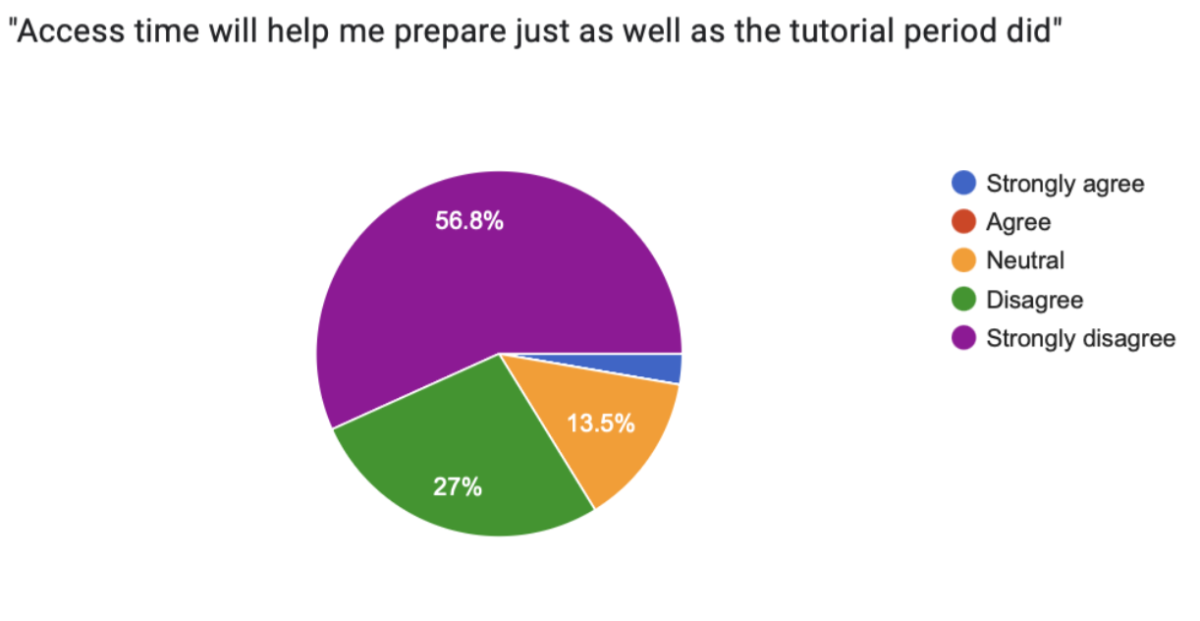
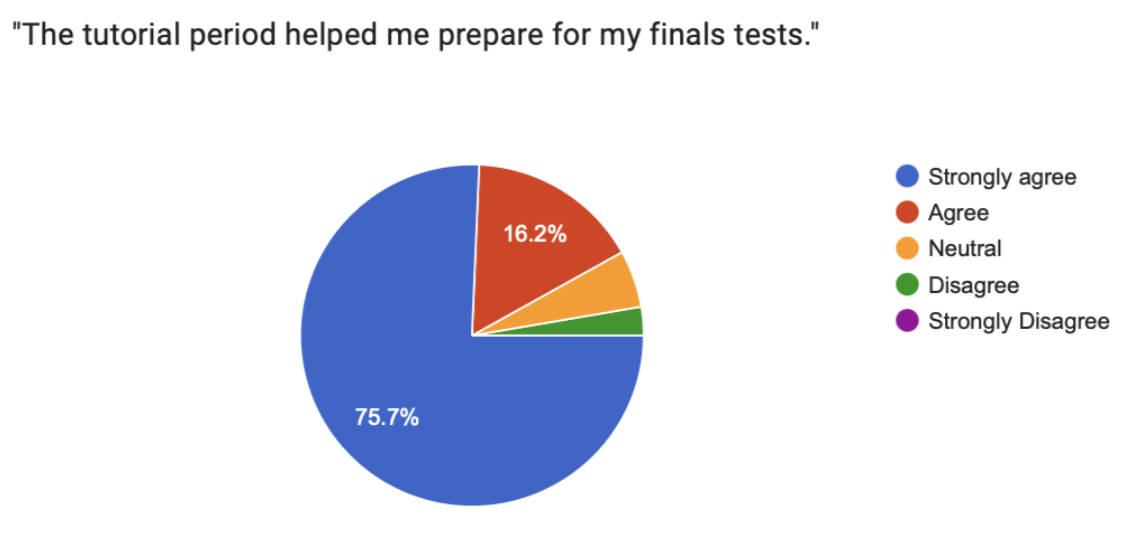
According to a schoolwide survey, 91.9% of students say the tutorial period helped them prepare for their finals. Additionally, students say that access time will not be as effective.
“I’m concerned that if I need help for a final, I won’t be able to get the amount I need in just the 30-minute advisory period,” added Summit senior William Jordan.
The inclusion of a daily tutorial period, along with longer class blocks and extended test times, allows students freedom with how they use study time.
“The study time in the morning before the final is so valuable for students who need extra time to study, or gosh forbid sleep a little bit,” said sophomore Honors English and AP Language and Composition teacher Erin Carroll. “There are a lot of finals that are very high stakes where kids are stressed about what their grade is going to end up looking like.”
“Everyone prepares for exams differently and there isn’t a wrong way to use the time if it helps someone,” said senior Laurel O’Brian
Additionally, some supporters argue that these features better reflect the academic demands students will face after high school, giving them repeated opportunities to practice studying for and managing higher-stakes exams — skills that are essential for success in college.
“I know I personally would have not wanted to go to college and have to figure out [important, heavily weighted] tests then,” said White, “It’s nice to have higher stakes things throughout high school to learn how to prepare. We’re not ready to just get rid of that.”
In addition to instructional goals, school leaders must account for state-mandated teaching minutes and how different periods are classified within the school day.
“[Tutorial] doesn’t count as instructional minutes when we’re not using them for planned teaching time,” said Assistant Principal Kristy Knoll, “And we’re already, as a district, pretty behind in our teaching minutes.”
On the Rotating Bell Schedule:
Summit, like all high schools in Bend-La Pine Schools, operates on a three-day rotation — green, black and silver days. Under this system, students see each class twice over the course of three school days, rather than attending the same classes at the same times every day.
Administrators said maintaining this rotation during finals week allows teachers to preserve instructional continuity and avoid starting the new semester mid-rotation, which they said can disrupt lesson pacing and planning.
“One thing we heard from a lot of teachers is that they would prefer to not have the finals schedule so they could keep teaching with the rotations,” said Knoll.
“Some teachers actually really want to be able to wrap up exams [early] so they can frontload the next unit [on the last green day] of semester one,” added Servignat. This way, she said, teachers can “keep people learning.”
But is it realistic to expect teachers to teach full lessons, or even start new units, in the two days before final grades are due?
“You kinda want semester one to end with semester one,” said Carroll.
Additionally, AP Language and Composition and freshman English teacher Kelsie Layana noted that due to how Canvas works, it would be difficult to start new lessons in semester one.
“Canvas has us start a new semester course,” said Layana. “If we upload semester two stuff into our semester one [Canvas class], it goes away.”
Looking Ahead:
As of now, students and teachers are preparing for 65-minute tests under the regular bell schedule.
“There isn’t a perfect finals schedule,” said Servignat, adding that she would ultimately like to see a more standardized approach across the district. “It would be lovely to have [a finals schedule] built into our rotating schedule and district calendar.”
Though it is too late to make changes for this semester, administrators said they remain open to revisiting the structure of finals week for semester two based on feedback from teachers and students.
“I hope we bring the finals schedule back,” said Carroll.