



























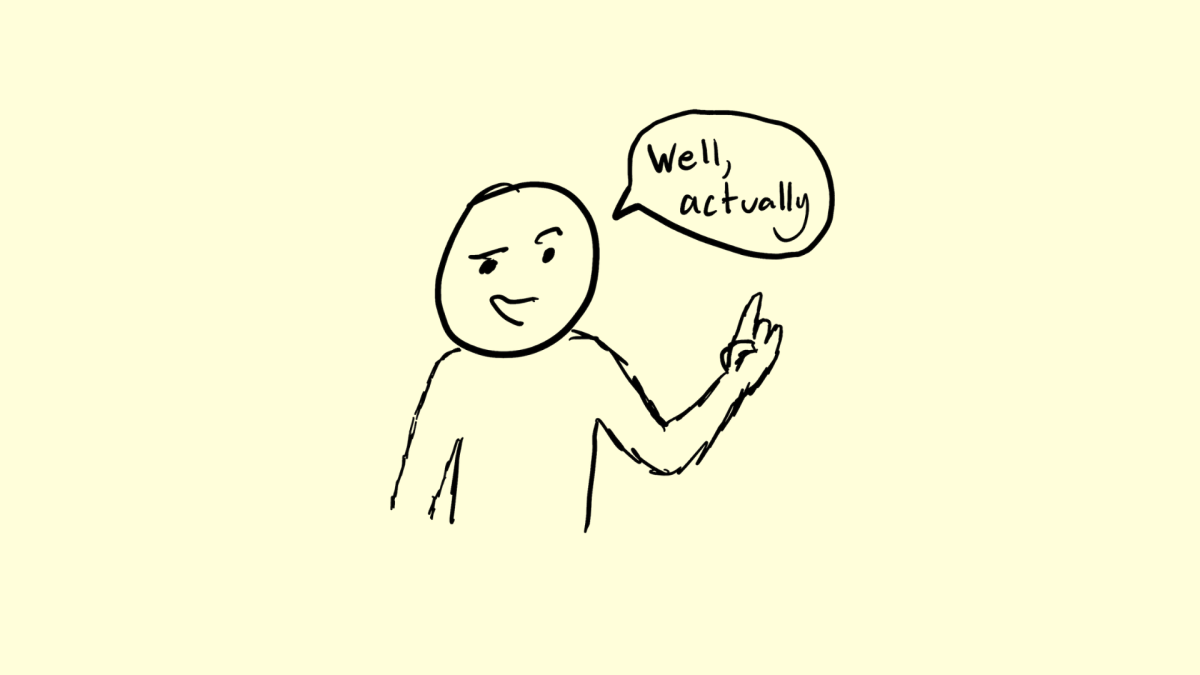
Every girl at Summit has that story; the one where she says the correct answer, gets ignored, and then watches a guy repeat the exact same thing. It’s a rite of passage, it’s common and it’s infuriating. Female Summit students encounter mansplaining — the assumption that women lack understanding, leading men to explain concepts in a condescending way -– frequently. Whether being lectured about a topic they already understand or retold the same thing they just discussed, it’s constantly occurring in Summit’s classrooms and hallways.
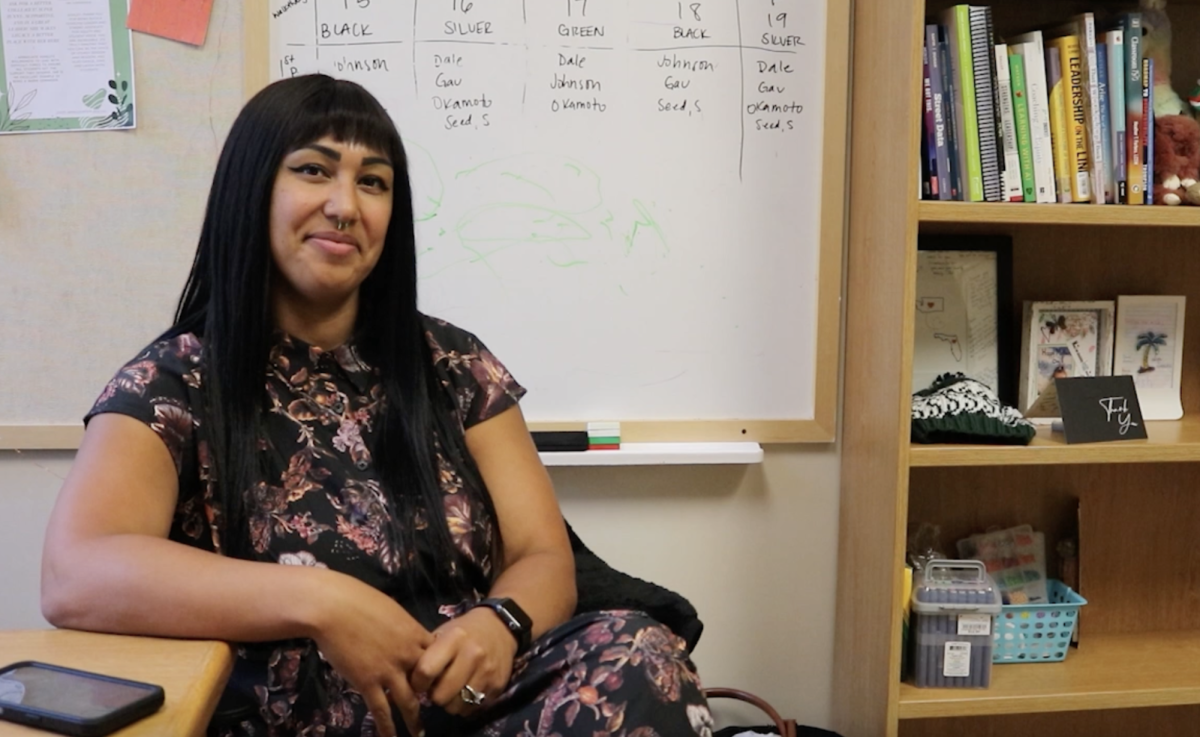
Often, girls have to raise their voices and argue just to be acknowledged and respected by men. Summit senior Nola Stryker repeatedly feels frustrated by this, passionately noting, “I find myself yelling. I find myself shouting at people…I get really passionate about being respected, and it really makes me angry.”
Not only does mansplaining impact women emotionally, but it also affects participation among female students. In an experiment conducted by Michigan State University, the author, Caitlin Briggs, discussed how “after being spoken to condescendingly by a man, women spoke fewer words in professional settings.” Female students get tired of constantly justifying their opinions and fighting for respect, so they avoid engaging in the conversation altogether.
Stryker discusses that even when she has opinions on a topic, “if there is a man in the conversation, [she] usually won’t talk. I used to really engage,” she said, but now she just feels like it isn’t worth the trouble to argue.
It may seem like a small problem until these instances occur in more serious settings. Instances like these foster frustration among Summit girls and have lasting implications beyond high school classrooms.
In a Fortune article, author Orianna Rosa Royle discusses how mansplaining has “serious consequences for women’s careers,” and because “career progression and pay rises are often unfairly attached to being able to shout out about your successes, women may therefore be passed over for promotions.”
Summit senior Kaia Chopra notices this dynamic too. “There’s a lot of women who just want to get their ideas recognized, and they want to learn… and mansplaining kind of invalidates all of it,” says Chopra.
Because men often disregard women’s voices and opinions, women are unable to advocate for themselves. And in academic settings, where women already struggle to be heard, mansplaining further undermines all the work they do to simply be acknowledged.
However, it’s important to remember that most men are completely oblivious. Obviously, there are some men who intentionally dominate and disrespect women, but for the most part, it seems like men simply aren’t aware when they’re mansplaining.
Chopra agrees, discussing how hopefully “if they were aware, they would try [to do it] less.” However, she also notes that, “some men don’t think of it as mansplaining”, and instead feel that they are enlightening women. For the men whose intentions are good, but delivery just misses the mark, Summit girls have some advice for you…
Stryker stresses that men need to understand that talking down to a woman “is inherently misogynistic” and that true help isn’t about being smarter or ‘better’–- instead, it’s about listening and understanding without assuming superiority.
Chopra echoes this, reminding men to “consider whether or not the woman actually asked for help or advice first,” and if they did, then, “provide [advice] in a non-condescending manner.”
Summit Junior Tessa Hoffmann emphasizes that respect begins with “listen[ing] first,” not dominating the conversation. Her peer, Junior Coco Dietrich, agrees, offering one direct, final tip: “Don’t assume we are stupid; don’t assume we are oblivious.”
Men realizing that their flawed communication with women has a lasting and considerable impact is the key to solving this issue. However, it’s important to highlight that while men are the ones actively mansplaining, women shouldn’t enable it.
Take Chopra, for example; instead of allowing the misogyny to discourage her, she challenges it. “I’m the type of person that wants to prove and wants to change it, and one of the ways to do it is to keep participating,” she says.
She also reframes the experience, utilizing it as empowerment over frustration. “I think it’s the funniest thing ever when someone mansplains to you, and then they get something wrong…it’s a victory to me,” Chopra notes.
When an instance of mansplaining occurs, it’s not an individual action; it’s feeding into a part of a pervasive social pattern.
Stryker frames misogyny as systemic, embedded, and subconscious, rather than an isolated pattern. She notes, “I wish there was more awareness around just how ingrained misogyny is in our society”, frustrated over how our culture has made mansplaining a learned, automatic behavior.
If we allow issues to determine our future and look the other way when misogyny reveals itself, women’s role in society will weaken and men’s will only become more prominent. We’ve seen this situation before. From coverture laws that erased women’s legal identities, to centuries of barring women from academic spaces, political environments, and professions — misogyny has repeatedly limited women’s independence and amplified male authority. These historical patterns reveal exactly what happens when sexism is ignored: increased discrimination of women, gender based violence and economic inequality.
However, this future is not inevitable, we have the power to push back against sexism and challenge chauvinistic norms. By calling out sexist interactions, advocating for yourself and supporting other women, we can make an inclusive and equitable future for ourselves.